Key takeaways
- Refresh rate: Determines how often the screen updates and reduces the time between visible frames.
- Contrast: Affects whether dark areas look deep and whether objects remain distinct from their background.
- Black equalization: Lifts shadow detail so enemies are easier to see in dark areas, although too much can wash out the image.
- Resolution: Improves distant target definition, but increases GPU load.
- Panel size: Changes pixel density, viewing distance, and how much of your vision the screen occupies.
- Motion response: Fast pixel transitions prevent ghosting while tracking a moving player.
The best gaming monitor for PUBG: Battlegrounds is a 27-inch 1440p display running at 240Hz, with strong shadow visibility, low input lag, and adjustable black equalization; choose a 360Hz 1080p model for competitive performance or a 4K 240Hz OLED if image quality matters as much as speed.
What matters most in a PUBG monitor
PUBG rewards the player who notices a helmet, shoulder, or weapon silhouette before the opponent sees them. That makes monitor choice less about maximum resolution alone and more about how clearly the panel separates targets from dark interiors, trees, rocks, and nighttime terrain while keeping motion readable during quick camera movements.

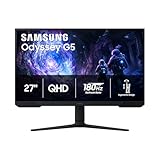
AOC 27" Gaming Monitor QHD 260Hz Overclocked IPS NVIDIA G-SYNC Q27G41ZE
Included for 'Best Gaming Monitor for PUBG: Battlegrounds' as a relevant option in this category; details come from the product listing.
View on Amazon
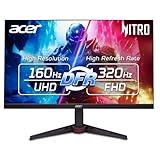
AOC 27 Inch Curved Gaming Monitor FHD 280Hz VA 0.3ms HDR, C27G4ZH
Included for 'Best Gaming Monitor for PUBG: Battlegrounds' because the listing specifies C27G4ZH, details this guide uses to compare options.
View on Amazon
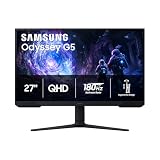
ASUS TUF Gaming VG27AQ3A 27 Inch 1440p 180Hz G-SYNC Gaming Monitor
Included for 'Best Gaming Monitor for PUBG: Battlegrounds' as a relevant option in this category; details come from the product listing.
View on Amazon
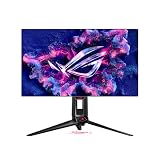
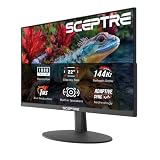
ASUS ROG Strix 26.5” 1440P QD-OLED Gaming Monitor (XG27ACDNG) -QHD (2560x1440), 360Hz, 0.03ms, Custom Heatsink, OLED Care+, G-SYNC Compatible, 99% DCI-P3, DisplayWidget, AI Gaming, 3yr Warranty
Included for 'Best Gaming Monitor for PUBG: Battlegrounds' because the listing specifies 360Hz and 0.03ms, details this guide uses to compare options.
View on Amazon- Refresh rate: Determines how often the screen updates and reduces the time between visible frames.
- Contrast: Affects whether dark areas look deep and whether objects remain distinct from their background.
- Black equalization: Lifts shadow detail so enemies are easier to see in dark areas, although too much can wash out the image.
- Resolution: Improves distant target definition, but increases GPU load.
- Panel size: Changes pixel density, viewing distance, and how much of your vision the screen occupies.
- Motion response: Fast pixel transitions prevent ghosting while tracking a moving player.
Best PUBG monitor choices by player type
| Player situation | Recommended class | Useful specifications | Why it fits PUBG |
|---|---|---|---|
| Competitive player prioritizing visibility and latency | Fast 27-inch IPS or OLED | 1440p, 240–360Hz, 1ms-class response | Sharp enough for distant enemies without the GPU demand of 4K |
| Esports-style player with a mid-range GPU | 24–25-inch esports monitor | 1080p, 240–540Hz, low-lag mode | High frame rates are easier to achieve and the compact image is easy to scan |
| Player who wants PUBG plus cinematic single-player games | 27-inch OLED | 1440p, 240Hz, high contrast | Excellent motion clarity and near-black detail in a dark room |
| Powerful PC and preference for maximum detail | 27-inch 4K OLED | 4K, 240Hz, DisplayPort 2.1 preferred | Very clear distant silhouettes, with enough refresh headroom for competitive play |
| Console player | 27-inch or 32-inch 4K display | 4K, 120Hz, HDMI 2.1 | Matches the practical output ceiling of current consoles |
Resolution and refresh rate: the most important trade-off
For most PC players, 1440p is the best balance for PUBG. Compared with 1080p, it provides substantially cleaner distant shapes and less shimmering around foliage. Compared with 4K, it requires fewer pixels and is easier for a graphics card to drive at a consistently high frame rate.
A 27-inch 1440p monitor has approximately 109 pixels per inch, while a 27-inch 4K model has approximately 163 pixels per inch. The 4K screen can make a faraway player easier to identify, but only if your system maintains stable frame delivery. A 4K image that falls frequently below the refresh rate can feel less responsive than a steady 1440p image.
Refresh rate matters because each refresh shortens the interval between displayed frames:
- 144Hz: one refresh every 6.94 milliseconds
- 240Hz: one refresh every 4.17 milliseconds
- 360Hz: one refresh every 2.78 milliseconds
- 540Hz: one refresh every 1.85 milliseconds
The jump from 60Hz to 144Hz is dramatic. The move from 144Hz to 240Hz is noticeable for competitive players. Above 240Hz, the benefit is more specialized: you need very high and consistent frame rates, low system latency, and the skill to take advantage of small timing improvements.
A useful bandwidth calculation
Uncompressed 4K at 240Hz requires approximately 3,840 × 2,160 × 240 × 24 bits per second, or about 47.8 Gbit/s before blanking and protocol overhead. That is beyond the practical bandwidth of older display connections, so 4K 240Hz monitors commonly use Display Stream Compression, a newer DisplayPort connection, or both. Check the graphics card output, monitor input, cable specification, and whether the desired mode requires DSC before buying.
Contrast and black equalization
Contrast affects PUBG in two different ways. A high-contrast panel can make a dark player silhouette stand out against a bright sky or wall. However, a display with poor shadow handling may crush several dark shades into the same black, hiding a crouching enemy inside a building.
OLED monitors have individually controlled pixels and can produce exceptionally deep blacks. This gives them outstanding contrast in a dim room. Their weakness is that very dark shadow detail can appear too dark with default settings, and bright scenes may trigger automatic brightness limiting on some models. A moderate black-equalizer setting can help, but excessive adjustment makes the entire image gray and reduces depth.
Fast IPS monitors generally offer more consistent brightness and no OLED burn-in concern, but their native contrast is usually lower. VA monitors can offer stronger contrast than IPS, though slow dark transitions on some VA models can create black smearing during movement. For PUBG, a fast IPS display with competent shadow controls is often safer than a VA panel with attractive contrast numbers but weak dark response.
Starting settings for dark-area visibility
Use these as a starting point rather than universal rules:
- Set the monitor brightness around 20–40% in a normally lit room, then raise it only enough to see dark detail.
- Leave contrast near its factory default unless a calibration guide for the specific model recommends otherwise.
- Start black equalizer or shadow boost at a middle value, often around 50–60 on a 0–100 scale.
- Increase it one step at a time in Training Mode. Stop when dark clothing becomes visible without turning buildings and foliage gray.
- Use the lowest overdrive setting that removes obvious trailing. The fastest setting can cause bright inverse ghosting.
- Keep HDR off for competitive SDR play if it makes brightness fluctuate or obscures shadow consistency.
Do not use extreme black equalization as a substitute for a correctly configured game image. PUBG’s in-game brightness, monitor gamma, GPU range, and Windows HDR setting can all affect the result. Use the same configuration in practice and ranked matches so your visual expectations remain consistent.
Panel size and viewing distance
A 24- or 25-inch 1080p monitor is popular in competitive setups because the whole image fits comfortably within a short viewing distance. It also makes high frame rates easier. Its lower pixel density, however, produces less precise distant detail than 1440p.
A 27-inch 1440p monitor is the strongest general recommendation. It provides a large enough image for spotting movement while retaining high pixel density. Sit roughly 60–80 centimeters away and adjust the display so you can scan the corners without moving your head excessively.
A 32-inch 1440p screen is less dense and can make individual pixels more visible at a close desk distance. A 32-inch 4K monitor solves that sharpness issue, but it needs a substantially faster GPU. Ultrawide monitors can be immersive, yet competitive players should check PUBG’s field-of-view behavior and make sure the extra width does not make important targets appear too small.
Specific monitor classes worth considering in 2026
Best all-rounder: 27-inch 1440p 240Hz
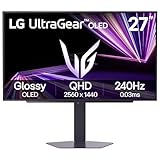
This class is the best fit for most serious PUBG players. Look for Adaptive-Sync, a real low-latency mode, a usable shadow-control feature, and a response-time setting that works across the refresh range. OLED examples include the Alienware AW2725DF, while fast IPS alternatives are available from manufacturers such as ASUS, LG, and MSI. Market pricing commonly falls around $400–$800 depending on panel technology and features.
Best for maximum competitive speed: 24–25-inch 1080p 360Hz or 540Hz
The BenQ Zowie XL2566K is a known 24.5-inch 1080p 360Hz TN option, and the BenQ Zowie XL2586X is a 24.1-inch 1080p 540Hz model. These screens prioritize motion clarity, latency, and controllable image presentation over resolution and cinematic contrast. They make the most sense with a powerful CPU and a system that can sustain very high frame rates. Prices commonly range from roughly $350 to $700.
Best for detail and mixed gaming: 27-inch 4K 240Hz OLED
The ASUS ROG Swift OLED PG27UCDM is an example of this class. It combines very high pixel density with a 240Hz refresh rate and OLED contrast. It is an excellent choice for a powerful PC, but 4K PUBG performance can be demanding, and DisplayPort 2.1 or DSC compatibility should be checked. Similar models generally sit in the $900–$1,300 range.
Match the monitor to your PC
Choose the monitor based on your sustained frame-rate target, not the maximum FPS shown for a few seconds. If your PC usually produces 170–220 FPS at 1440p, a 240Hz display is a sensible match. If it stays near 300–400 FPS at 1080p, 360Hz becomes more worthwhile. If your frame rate varies widely, Adaptive-Sync is more valuable than buying the highest possible refresh rate.
For a new purchase, the best gaming monitor for PUBG: Battlegrounds for most people remains a 27-inch 1440p 240Hz model with adjustable shadow detail and low input lag. Choose 1080p 360Hz or 540Hz when competitive speed is the only priority, and choose 4K 240Hz OLED when your graphics hardware, budget, and preference for image quality justify the extra demand.