Key takeaways
- Refresh rate that’s real: Look for 120Hz or higher at native 4K over DisplayPort 1.4 or HDMI 2.1. Some budget panels only hit their headline refresh rate at reduced resolution, so check the spec sheet for “3840×2160 @ 144Hz” rather than a bare “144Hz” claim.
- Panel type matters more than peak brightness: IPS is the safe default at this price — good colour, wide viewing angles, acceptable response times. VA panels offer deeper contrast for single-player and cinematic games but can smear in fast motion. True OLED is still above this budget.
- GPU reality check: Native 4K at high refresh rates is demanding. If you’re running a mid-range card, prioritise a monitor with strong upscaling support and VRR (FreeSync Premium or G-SYNC Compatible) so frame rate dips stay smooth rather than stuttering.
- Ports and cable clutter: HDMI 2.1 is essential for PS5 and Xbox Series X at 4K120. USB-C with power delivery is a genuine luxury at this price and worth paying for if you dock a laptop, but don’t sacrifice refresh rate to get it.
- Ignore HDR marketing, mostly: DisplayHDR 400 on an edge-lit panel is a checkbox, not a feature. Judge these monitors on their SDR performance and treat any HDR capability as a small bonus rather than a reason to buy.
What's inside
Shopping for a 4K gaming monitor under $500 is trickier than it looks. The panel market has matured to the point where 3840×2160 is genuinely affordable, but the sub-$500 bracket is crowded with compromises: 60Hz office panels wearing gaming badges, “HDR” certifications that mean almost nothing, and refresh rates that only apply at 1080p. The result is a lot of buyers spending real money on a monitor that looks stunning on the desktop and falls apart the moment a shooter loads.
This guide cuts through that. Every pick below is a monitor we’d genuinely recommend to a friend building or upgrading a gaming rig in 2026, chosen for the balance of resolution, refresh rate, panel quality, and connectivity you actually get for the money. We’ve focused on models that hold their value proposition at real street prices — not launch MSRPs that never applied — and we flag where each one asks you to compromise, because at this budget every monitor does.
As an Amazon Associate we earn from qualifying purchases at no extra cost to you. Product prices and availability are accurate as of the date shown and are subject to change.





⚡ Save on Your Next PC — Amazon Prime
Prime members get fast free shipping on the systems above, plus early access to Prime Day & Black Friday PC deals. New members get a 30-day free trial.
Watch: Best 4K Monitor Under $500 — Video Review
How to Choose 4K Monitor Under $500
- Refresh rate that’s real: Look for 120Hz or higher at native 4K over DisplayPort 1.4 or HDMI 2.1. Some budget panels only hit their headline refresh rate at reduced resolution, so check the spec sheet for “3840×2160 @ 144Hz” rather than a bare “144Hz” claim.
- Panel type matters more than peak brightness: IPS is the safe default at this price — good colour, wide viewing angles, acceptable response times. VA panels offer deeper contrast for single-player and cinematic games but can smear in fast motion. True OLED is still above this budget.
- GPU reality check: Native 4K at high refresh rates is demanding. If you’re running a mid-range card, prioritise a monitor with strong upscaling support and VRR (FreeSync Premium or G-SYNC Compatible) so frame rate dips stay smooth rather than stuttering.
- Ports and cable clutter: HDMI 2.1 is essential for PS5 and Xbox Series X at 4K120. USB-C with power delivery is a genuine luxury at this price and worth paying for if you dock a laptop, but don’t sacrifice refresh rate to get it.
- Ignore HDR marketing, mostly: DisplayHDR 400 on an edge-lit panel is a checkbox, not a feature. Judge these monitors on their SDR performance and treat any HDR capability as a small bonus rather than a reason to buy.
The Best Picks Reviewed
Acer Nitro VG270K V4
The strongest all-rounder in this bracket: a 27-inch 4K IPS panel running 160Hz natively, with a Dual-Frame-Rate mode that drops to 1080p at 320Hz for competitive shooters. That flexibility — cinematic detail when you want it, esports responsiveness when you need it — is unusual at this price, and the IPS colour is more than good enough for content work on the side.
ASUS ROG XG27UCSR
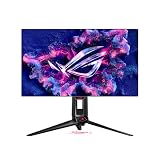
ASUS’s 27-inch 4K panel pairs 162Hz with USB-C connectivity and G-SYNC compatibility, making it the pick for anyone splitting time between a gaming desktop and a work laptop. It’s typically the priciest option here and sits close to the $500 ceiling, but the build quality and OSD refinement justify the premium if you can find it discounted.
ASUS TUF Gaming VG27UQ1A
A 27-inch 4K HDR panel with 160Hz, 1ms response, ELMB Sync, and 95% DCI-P3 coverage — an unusually complete feature list for the money, backed by a three-year warranty that beats most rivals. Motion clarity is genuinely good with ELMB engaged, though as always you’ll trade a little brightness for it.
Dell S2725QS
The value pick. Dell’s 27-inch 4K IPS runs 120Hz with FreeSync Premium and a 5ms response — noticeably behind the 160Hz crowd for competitive play, but perfectly smooth for single-player games and console use, and it undercuts the rest of this list comfortably. Colour accuracy out of the box is excellent, making it the best choice for mixed gaming and productivity.
Samsung Odyssey G7 (G75F) 37″
A 37-inch curved 4K VA panel is a very different proposition: immersive to the point of being enveloping, with the deep blacks VA does best in atmospheric single-player titles. It’s a stretch at this budget and needs a deep desk, but for sim racing, flight sims, and cinematic games it delivers a sense of scale nothing else here matches.
Frequently Asked Questions
Can I actually run 4K games at 160Hz?
Rarely at native resolution with maxed settings, unless you own a high-end GPU. Most players use upscaling to hit high frame rates, and the extra refresh headroom is still worth having — it makes desktop use crisper and gives you room to grow when you next upgrade your graphics card.
Is 27 inches too small for 4K?
No, but it changes what you get. At 27 inches, 4K gives you exceptional sharpness rather than more usable desktop space — text and textures look razor-sharp, and you’ll likely want display scaling in Windows. If you want extra screen real estate, look at 32 inches and above.
Do I need HDMI 2.1 for console gaming?
Yes, if you want 4K at 120Hz on a PS5 or Xbox Series X. HDMI 2.0 caps you at 4K60. Every monitor here handles console duty, but confirm the port version before buying if consoles are your primary use.
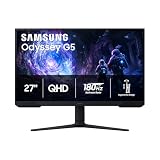
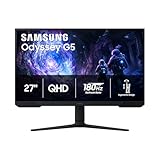
What about the Samsung Odyssey G5 (G51F)?
It’s a strong monitor, but it’s a 1440p panel rather than 4K, so it falls outside the scope of this guide. If your GPU is mid-range and you’d rather have high frame rates than maximum resolution, it’s genuinely worth considering as an alternative — QHD at high refresh is an easier ask of your hardware.
Final Thoughts
For most gamers, the Acer Nitro VG270K V4 is the smartest buy in this bracket — native 4K at 160Hz with a genuinely useful high-refresh 1080p mode covers both halves of a gaming library without a price premium. If you want the most complete feature set and a longer warranty, the ASUS TUF VG27UQ1A is the better-equipped alternative, while the Dell S2725QS remains the value champion for anyone happy at 120Hz who’d rather spend the difference on their GPU.