Key takeaways
- Entry to mid GPU pairs best with 1080p high-refresh or 1440p at tuned settings.
- Upper-mid GPU is the natural 1440p high-refresh machine, the most common balanced build.
- Flagship GPU is what 4K gaming genuinely needs to stay smooth.
- Screen size and distance matter too: 1440p shines around 27 inches, while 4K rewards larger panels viewed up close.
What's inside
- Watch: 1080p vs 1440p vs 4K for Gaming — Video Review
- 1080p: Highest Frame Rates, Lowest Cost
- 1440p: The 2026 Sweet Spot
- 4K: Maximum Detail, Maximum Demand
- Match Resolution to Your GPU, Not the Other Way Around
- Don’t Forget Refresh Rate in the Equation
- Tips
- Related Guides
- Frequently Asked Questions
- Conclusion
- Related Articles
- Related Guides
Resolution is the single biggest decision behind how your games look and how much horsepower you need to run them, yet it’s often chosen by accident based on whatever monitor was on sale. The jump from 1080p to 1440p to 4K isn’t just more pixels; it reshapes your entire budget, because a higher resolution demands a stronger graphics card to keep frame rates high. Choosing the right one for your eyes, your desk, and your GPU is what makes a setup feel right.
- Watch: 1080p vs 1440p vs 4K for Gaming — Video Review
- 1080p: Highest Frame Rates, Lowest Cost
- 1440p: The 2026 Sweet Spot
- 4K: Maximum Detail, Maximum Demand
- Match Resolution to Your GPU, Not the Other Way Around
- Don’t Forget Refresh Rate in the Equation
- Tips
- Related Guides
- Frequently Asked Questions
- Conclusion
- Related Articles
- Related Guides
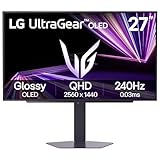
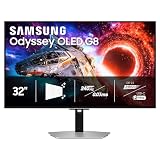
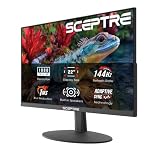
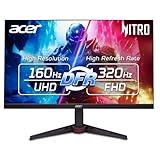
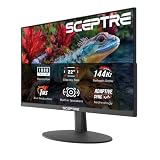
This guide breaks down what each resolution actually delivers, how much GPU muscle it takes to drive it well, and which one makes sense for the way you play. You’ll learn where the sweet spots are and where the diminishing returns kick in, so you don’t overspend on pixels you can’t feed. The 1440p monitors below sit at the resolution most gamers find is the best all-around balance in 2026.
As an Amazon Associate we earn from qualifying purchases at no extra cost to you. Product prices and availability are accurate as of the date shown and are subject to change.




⚡ Save on Your Next PC — Amazon Prime
Prime members get fast free shipping on the systems above, plus early access to Prime Day & Black Friday PC deals. New members get a 30-day free trial.
Watch: 1080p vs 1440p vs 4K for Gaming — Video Review
1080p: Highest Frame Rates, Lowest Cost
1920×1080 remains the frame-rate champion. Because there are fewer pixels to render, even mid-range GPUs push very high frame rates, which is exactly what competitive esports players want on a fast 144Hz or 240Hz panel. The trade-off is sharpness: on larger screens 1080p starts to look soft, and pixels become visible. If your priority is maximum frames for shooters and you’re on a tighter budget, 1080p is still a completely valid, high-value choice.
1440p: The 2026 Sweet Spot
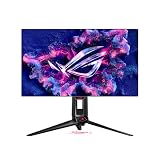
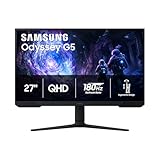
2560×1440 is where most gamers should land today. It delivers a big visual upgrade over 1080p, noticeably crisper text and detail, while staying far easier to drive than 4K. A mainstream to upper-mid GPU can hold high refresh rates at 1440p, making it the ideal balance of clarity and performance. Panels like the Samsung Odyssey G5 QHD, the ASUS TUF Gaming VG27AQ3A 180Hz, or the ASUS ROG XG27ACS with G-SYNC show how affordable high-refresh 1440p has become. For most people building in 2026, this is the target.
4K: Maximum Detail, Maximum Demand
3840×2160 is stunning, delivering razor-sharp detail that’s especially gorgeous in slower, cinematic single-player games on a large screen. But it’s four times the pixels of 1080p, so it demands a top-tier GPU to hold high frame rates, and even then you’ll lean on upscaling tech. 4K makes the most sense if you have a powerful graphics card, sit close to a big display, and value visual fidelity over the highest possible frame counts.
Match Resolution to Your GPU, Not the Other Way Around
- Entry to mid GPU pairs best with 1080p high-refresh or 1440p at tuned settings.
- Upper-mid GPU is the natural 1440p high-refresh machine, the most common balanced build.
- Flagship GPU is what 4K gaming genuinely needs to stay smooth.
- Screen size and distance matter too: 1440p shines around 27 inches, while 4K rewards larger panels viewed up close.
Don’t Forget Refresh Rate in the Equation
Resolution and refresh rate compete for the same GPU budget. A 1440p 180Hz panel asks more of your card than 1440p 60Hz, so decide whether you value smoothness (high refresh) or fidelity (higher resolution) more, because at a fixed GPU budget you’re trading one against the other. Competitive players lean toward frames; single-player and visual-first gamers lean toward pixels. Pairing a G-SYNC or FreeSync display with your card also smooths out the frame-rate swings either way.
Tips
- Choose 1440p if you’re unsure; it’s the safest all-rounder and the resolution most GPUs are now built to target.
- Buy a monitor with adaptive sync (FreeSync or G-SYNC Compatible) to eliminate tearing at any resolution.
- Don’t pair a weak GPU with a 4K panel; you’ll be forced into low settings that look worse than a sharp 1440p image.
- Consider your seating distance; at typical desk range the clarity gap between 1440p and 4K on a 27-inch screen is smaller than the spec sheet suggests.
Frequently Asked Questions
Is 1440p worth it over 1080p?
For most gamers, yes. The clarity jump is immediately visible, and modern GPUs handle 1440p high-refresh without breaking a sweat. It’s the upgrade most people notice and appreciate the most.
Do I need a 4K monitor to enjoy modern games?
Not at all. Plenty of gamers with high-end rigs choose 1440p high-refresh over 4K because smooth, fast frames often feel better than extra sharpness. 4K is a preference, not a requirement.
Can my GPU handle 4K?
Only flagship-class cards hold high frame rates at native 4K in demanding titles. Mid-range cards can do 4K in lighter games or with heavy upscaling, but 1440p is a far better match for them.
Does higher resolution reduce frame rate?
Yes. More pixels mean more work for the GPU, so at the same settings 4K runs slower than 1440p, which runs slower than 1080p. That’s the core trade-off this whole decision revolves around.
Conclusion
Think of resolution as a slider between raw frame rate and visual sharpness, with your GPU deciding how far you can push it. 1080p wins on frames and value, 4K wins on detail for those with the hardware, and 1440p sits in the middle as the balanced pick most gamers should choose in 2026. Match the resolution to the graphics card you actually own, and the monitors above make the 1440p sweet spot easy to hit.