Key takeaways
- Total immersion: The curvature and width fill peripheral vision like nothing else.
- Productivity bonus: Super-ultrawides replace two or three monitors on your desk.
- Elite panels: QD-OLED and Mini-LED options deliver stunning contrast.
- High refresh: Up to 240Hz available even at massive resolutions.
What's inside
The race for the largest curved gaming monitor has pushed screen sizes into genuinely cinematic territory, with panels now stretching from immersive 49-inch super-ultrawides all the way to wall-swallowing 57-inch dual-4K behemoths. These displays are not just about bragging rights; the wrap-around curvature fills your peripheral vision and pulls you deeper into open-world games and flight sims than any flat panel can. But size alone does not make a great monitor, and the wrong pick can leave you with an awkward aspect ratio or a GPU that gasps for air.
This guide breaks down the biggest and best curved gaming displays on the market, from the value-oriented INNOCN 49-inch to the flagship Samsung Odyssey Neo G9 57-inch and LG’s cutting-edge OLED UltraGear models. We will help you weigh raw size against resolution, refresh rate, and the real-world GPU demands each one places on your rig.
As an Amazon Associate we earn from qualifying purchases at no extra cost to you. Product prices and availability are accurate as of the date shown and are subject to change.


🎮 Get More From Your Setup — Free
Prime Gaming gives you free PC games every month, in-game loot, and a free Twitch channel sub — plus fast free shipping on all the gear above. New members get a 30-day free trial.
Watch: Largest Curved Gaming Monitor: Review & Buyer’s Guide — Video Review
Design & Build
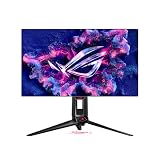
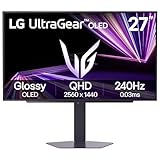
Big curved monitors live or die by their stands, and the premium models here get it right. The Samsung 57-inch Neo G9 uses an aggressive 1000R curve, the tightest on the market, so even the far edges of that massive panel stay within comfortable viewing distance. LG’s UltraGear evo G9 52-inch and 45-inch OLED models pair sleek chassis with fully adjustable tilt, height, and swivel stands, while the INNOCN 49C1G keeps costs down with a more utilitarian but still height-adjustable design. Cable management and VESA compatibility are standard across the lineup, which matters when you are mounting this much glass.
Performance
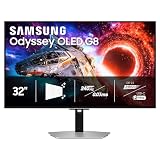
Resolution and refresh rate are where these giants separate. The INNOCN 49-inch and Amzfast 49-inch deliver 32:9 ultrawide gaming at 120-144Hz for a smoother, more affordable entry point. The Samsung Odyssey Neo G9 57-inch is the technical showpiece, combining dual-4K resolution with 240Hz, Quantum Mini-LED, and DisplayPort 2.1, but it demands a top-tier GPU to drive all those pixels. For pure image quality, the LG 45-inch UltraGear OLED and Samsung 49-inch Odyssey QD-OLED offer near-instant response times and perfect blacks, with the LG 52-inch 5K2K pushing an incredible pixel count for both gaming and productivity.
Pros & Cons
- Total immersion: The curvature and width fill peripheral vision like nothing else.
- Productivity bonus: Super-ultrawides replace two or three monitors on your desk.
- Elite panels: QD-OLED and Mini-LED options deliver stunning contrast.
- High refresh: Up to 240Hz available even at massive resolutions.
- GPU hungry: Dual-4K and 5K2K panels require powerful, expensive graphics cards.
- Desk footprint: These monitors demand a deep, wide desk.
- Premium pricing: The best OLED and Mini-LED models are a serious investment.
Alternatives to Consider
If a 49-inch or larger panel feels like overkill, a 34-inch or 45-inch ultrawide offers most of the immersion with far gentler GPU demands and a smaller footprint. Buyers who prioritize competitive esports over cinematic scale may prefer a flat 27-inch 1440p high-refresh display instead. But for sim racing, flight simulation, and single-player epics, nothing replicates the enveloping feel of these largest curved screens.
Frequently Asked Questions
What GPU do I need for a 57-inch dual-4K monitor?
To drive the Samsung Neo G9 at high frame rates you will want a current flagship graphics card. Mid-range GPUs can run it but will struggle to hit the full 240Hz in demanding titles.
Is a 32:9 aspect ratio supported in all games?
Most modern titles support ultrawide and super-ultrawide ratios, but some older or competitive games may letterbox the image or offer only limited field-of-view scaling.
OLED or Mini-LED for a large curved display?
OLED delivers perfect blacks and instant response, ideal for dark, cinematic games. Mini-LED like the Neo G9 pushes higher peak brightness, which suits bright HDR content and well-lit rooms.
Do these monitors replace a multi-monitor setup?
Yes. A 49-inch or larger super-ultrawide comfortably splits into multiple windows, letting you game and monitor chat, guides, or streams side by side without bezels in the way.
Verdict
The largest curved gaming monitor worth buying comes down to your GPU and your goals. The Samsung Odyssey Neo G9 57-inch is the ultimate statement piece for those with the hardware to feed it, the LG 45-inch UltraGear OLED is the sweet spot for image quality, and the INNOCN 49-inch remains the smartest way to taste super-ultrawide immersion without emptying your wallet.