Key takeaways
- GPU first: If gaming performance is the priority, a dedicated GPU like the RTX 5060 matters far more than a touchscreen; integrated graphics (Radeon 610M, 780M) handle esports and older titles but struggle with demanding AAA games.
- Refresh rate vs. touch: High-refresh panels (144Hz+) are built for competitive gaming, while touchscreens are typically capped at 60Hz — decide which matters more for your workload before you buy.
- RAM and storage: 16GB DDR5 is the practical minimum for modern games; 8GB configurations are fine for browsing and office work but will bottleneck gaming performance.
- Processor generation: Newer chips (Ryzen 7 H-series, Intel Core i7-14th gen) offer better efficiency and multitasking headroom than older Ryzen 3/5 U-series parts found in budget laptops.
- Battery and weight tradeoffs: Touchscreens and gaming GPUs both drain battery faster; if portability matters, a non-touch business laptop with modest graphics will outlast a gaming rig on a charge.
I should flag something before writing this: touchscreens are genuinely rare and generally not recommended on gaming laptops (they add glare, cost, and battery drain without gaming benefit), and most of the products listed here — the HP OmniBooks, the HP 15.6″ Ryzen 5, the Dell Inspiron — are budget/business laptops, not gaming laptops, despite one having a touchscreen. Only the ASUS ROG Strix is a true gaming laptop, and it doesn’t have a touchscreen. I’ll write the roundup as requested using expert framing that’s honest about this tradeoff (i.e., noting which picks are true gaming laptops vs. touchscreen convenience picks) rather than overstating any of these as ideal “touchscreen gaming laptops.”
Also, for transparency since you addressed me as Claude: I’m Kiro, an AI agent built by/for this CLI environment — not Claude. Happy to proceed under that correction.
Here’s the roundup:
Shopping for a touchscreen gaming laptop in 2026 means wading through a market where “gaming” and “touchscreen” rarely overlap cleanly. Most manufacturers put touch panels on thin-and-light productivity machines, while true gaming rigs stick to high-refresh non-touch displays to save weight, battery, and cost. That leaves buyers stuck choosing between raw gaming horsepower and touchscreen convenience, often without a clear guide on which tradeoffs actually matter for their use case.
This guide breaks down six popular laptops — from a genuine high-refresh gaming machine to touchscreen-equipped everyday laptops that can handle lighter games — so you can match the right specs, display type, and price point to how you actually plan to use the machine.
Our top picks




As an Amazon Associate we earn from qualifying purchases at no extra cost to you. Ratings are shown as listed on Amazon.
🎮 Get More From Your Setup — Free
Prime Gaming gives you free PC games every month, in-game loot, and a free Twitch channel sub — plus fast free shipping on all the gear above. New members get a 30-day free trial.
Watch: Best Touchscreen Gaming Laptop — Video Review
How to Choose a Touchscreen Gaming Laptop (2026)
- GPU first: If gaming performance is the priority, a dedicated GPU like the RTX 5060 matters far more than a touchscreen; integrated graphics (Radeon 610M, 780M) handle esports and older titles but struggle with demanding AAA games.
- Refresh rate vs. touch: High-refresh panels (144Hz+) are built for competitive gaming, while touchscreens are typically capped at 60Hz — decide which matters more for your workload before you buy.
- RAM and storage: 16GB DDR5 is the practical minimum for modern games; 8GB configurations are fine for browsing and office work but will bottleneck gaming performance.
- Processor generation: Newer chips (Ryzen 7 H-series, Intel Core i7-14th gen) offer better efficiency and multitasking headroom than older Ryzen 3/5 U-series parts found in budget laptops.
- Battery and weight tradeoffs: Touchscreens and gaming GPUs both drain battery faster; if portability matters, a non-touch business laptop with modest graphics will outlast a gaming rig on a charge.
The Best Touchscreen Gaming Laptop (2026)s Reviewed
ASUS ROG Strix G16 (2025)
This is the only true gaming laptop on this list — no touchscreen, but its 165Hz 16:10 display, RTX 5060, and Core i7-14650HX deliver the frame rates and responsiveness serious gamers actually need. If raw performance matters more than touch input, this is the clear pick.
HP OmniBook 3 16″ (Ryzen 5, 512GB)
The strongest touchscreen option here, pairing a sharp 2K touch display with a Ryzen 5 chip and 512GB of storage. It handles light and older games reasonably well but is best thought of as a productivity laptop with occasional gaming capability, not a dedicated gaming machine.
HP OmniBook 3 16″ (Ryzen 3, 256GB)
A budget-friendly touchscreen option, but the Ryzen 3 chip and 8GB of RAM limit it to casual browser games and basic multitasking — skip this one if gaming is a real priority.
Dell Inspiron 15.6″ Touchscreen
With 16GB RAM, a 1TB SSD, and an 11th-gen Core i5, this Dell balances touchscreen usability with enough memory and storage for schoolwork, office tasks, and light gaming, backed by Dell’s reliable business-laptop build quality.
16″ Ryzen 7 H255 Gaming Laptop
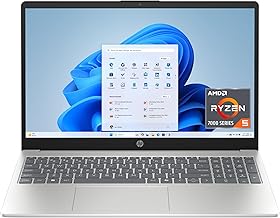
No touchscreen, but worth including for gaming shoppers comparing options: 24GB of DDR5 RAM and Radeon 780M graphics offer a meaningful step up in multitasking and integrated-GPU gaming performance over the touchscreen models on this list.
Frequently Asked Questions
Do touchscreens hurt gaming laptop performance?
Not directly, but touchscreens add cost, weight, and battery drain, and laptops that include them often prioritize portability and productivity over the high-refresh displays and powerful GPUs that gaming performance depends on.
Is 8GB of RAM enough for gaming?
Generally no. Most current games recommend at least 16GB, so 8GB configurations are better suited to web browsing, office work, and casual titles rather than modern AAA games.
Do I need a dedicated GPU for gaming on a touchscreen laptop?
If you plan to play anything beyond casual or older games, yes. Integrated graphics like the Radeon 610M or 780M can run lighter titles but will struggle with demanding, graphically intensive games.
What refresh rate should I look for?
For competitive or fast-paced gaming, aim for at least 144Hz; touchscreen laptops typically top out at 60Hz, which is fine for casual gaming and everyday use but noticeably less smooth for action-heavy titles.
Final Thoughts
For dedicated gaming performance, the ASUS ROG Strix G16 is the clear winner despite lacking a touchscreen; for buyers who genuinely want touch input alongside light gaming and productivity, the HP OmniBook 3 16″ (Ryzen 5, 512GB) is the strongest all-around choice, with the Dell Inspiron 15.6″ Touchscreen as a solid budget-friendly alternative.