Key takeaways
- Full-size Razer keyboard: about 17.5 inches wide; choose a wrist rest around 17 to 18 inches wide.
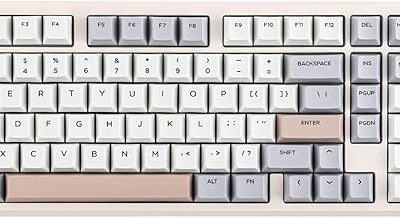
- Tenkeyless, or TKL: about 14 inches wide; choose a rest around 13.5 to 14 inches wide.
- 75% keyboard: about 12.5 to 13 inches wide; choose a rest around 12 to 13 inches wide.
- 65% keyboard: about 12 to 12.5 inches wide; choose a rest around 11.5 to 12.5 inches wide.
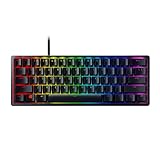
- 60% keyboard: about 11.5 to 12 inches wide; choose a compact rest around 11.5 to 12 inches wide.
What's inside
If you are asking what size wrist rest for Razer mechanical keyboard, the safest rule is to match the wrist rest to the keyboard’s usable width, not the brand name alone. A full-size Razer keyboard needs a much longer rest than a 60% or 75% board, while a tenkeyless model sits between the two. Depth and height matter just as much: a pad that is too shallow can leave your palms unsupported, and one that is too tall can bend your wrists upward.
The Short Answer
Choose a wrist rest that is approximately the same width as your Razer keyboard, or up to about 0.5 inch narrower on each side. Measure the keyboard body rather than including a detachable cable or decorative overhang.
As an Amazon Associate we earn from qualifying purchases at no extra cost to you. Product prices and availability are accurate as of the date shown and are subject to change.


- Full-size Razer keyboard: about 17.5 inches wide; choose a wrist rest around 17 to 18 inches wide.
- Tenkeyless, or TKL: about 14 inches wide; choose a rest around 13.5 to 14 inches wide.
- 75% keyboard: about 12.5 to 13 inches wide; choose a rest around 12 to 13 inches wide.
- 65% keyboard: about 12 to 12.5 inches wide; choose a rest around 11.5 to 12.5 inches wide.
- 60% keyboard: about 11.5 to 12 inches wide; choose a compact rest around 11.5 to 12 inches wide.
A depth of 3 to 4 inches works for most desks and typing positions. For height, look for approximately 0.7 to 1 inch, depending on your keyboard’s front edge and your preferred posture. The goal is to support the heels of your palms while keeping your fingers able to reach the keys without a steep upward angle.
Standard Sizes
Razer’s keyboard families use several layouts, so the correct wrist rest depends on the layout rather than the switch type. The measurements below are practical buying targets. Actual keyboard dimensions can vary slightly by model, case design, and bezels.
| Keyboard layout | Typical keyboard width | Recommended wrist-rest width | Useful wrist-rest depth | Typical size in centimeters |
|---|---|---|---|---|
| Full-size | 17.5 in | 17–18 in | 3–4 in | 44.5 cm keyboard; 43.2–45.7 cm rest |
| Tenkeyless | 14 in | 13.5–14 in | 3–4 in | 35.6 cm keyboard; 34.3–35.6 cm rest |
| 75% | 12.5–13 in | 12–13 in | 3–4 in | 31.8–33 cm keyboard; 30.5–33 cm rest |
| 65% | 12–12.5 in | 11.5–12.5 in | 3–4 in | 30.5–31.8 cm keyboard; 29.2–31.8 cm rest |
| 60% | 11.5–12 in | 11.5–12 in | 3–4 in | 29.2–30.5 cm keyboard and rest |
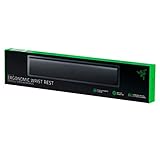
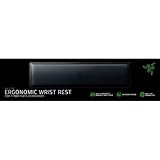
For a direct Razer-branded match, the Razer Ergonomic Wrist Rest for Full-Sized Keyboards is approximately 17.5 inches wide, 3.5 inches deep, and 0.9 inch high, or about 44.5 by 8.9 by 2.3 cm. It is intended for full-size boards with a number pad. The Razer Ergonomic Wrist Rest for Tenkeyless Keyboards is approximately 14 inches wide, 3.5 inches deep, and 0.9 inch high, or about 35.6 by 8.9 by 2.3 cm.
Compact alternatives are often listed by their actual measurements instead of a Razer layout name. A Keychron silicone rest measures about 12.48 by 3.15 inches, or 31.7 by 8 cm, making it a reasonable fit for many 75% and 65% keyboards. The Glorious Compact Wrist Pad measures 12 by 4 inches, or 30.5 by 10.2 cm, and is about 1 inch, or 2.5 cm, thick. These examples typically cost about $16 to $20, while prices can change by color, retailer, and sales period.
Width is the first priority, but thickness should match your keyboard. A low-profile Razer board may feel best with a wrist rest under 0.75 inch high. A standard-height mechanical keyboard usually pairs well with a rest between 0.75 and 1 inch. If your wrists feel pushed upward, choose a thinner pad rather than automatically selecting a softer one.
How to Measure Your Space
- Measure the keyboard’s front width. Use a tape measure or ruler from the left outside edge to the right outside edge. Measure the keyboard case, not just the letter-key section.
- Check the keyboard height. Measure from the desk to the top of the keycaps at the front row. Include any feet if you normally type with them extended.
- Measure available desk depth. Leave room for the keyboard, wrist rest, and your forearms. A wrist rest 3 to 4 inches deep needs at least that much clear space in front of the keyboard.
- Compare width with the rest. A wrist rest can be slightly narrower than the keyboard, but avoid one that is more than about 1 inch narrower overall. A much wider rest can also be awkward if it extends beyond the desk or mouse area.
- Check the height and slope. Place the rest against the keyboard and keep your hands in a neutral position. Your wrists should not be sharply bent backward while your fingers reach the home row.
- Account for movement. If you frequently move between the keyboard and mouse, a very deep pad may force your mouse farther away. In that case, choose about 3 inches of depth instead of 4 inches.
By Room or Use Case
Home office and all-day typing
For long work sessions, prioritize full palm support, a stable base, and a height that lines up with the front edge of the keyboard. A full-size Razer board generally needs a 17- to 18-inch rest, while a Razer TKL board needs roughly 14 inches. Memory foam, gel, or dense silicone can all work; the important factor is that the pad does not collapse so much that your hands rest on the desk.
Gaming desk with a full-size Razer keyboard
Choose a rest about 17.5 inches wide and 3.5 inches deep if you want a close visual and functional match. A non-slip underside is especially useful when gaming, since repeated hand movement can push a lightweight pad forward. Leave enough room beside the pad for mouse movement, particularly if your desk is less than 48 inches wide.
Compact gaming setup
A 60%, 65%, or 75% Razer-style layout works well with an 11.5- to 13-inch rest. A 12-inch compact pad is a flexible choice for many smaller boards. If your keyboard has a wide case or separated arrow cluster, measure it rather than relying only on the percentage label; two 75% keyboards can have noticeably different outside widths.
Shared or small desk
For a shallow desk, choose a compact rest no deeper than 3 inches. This keeps the keyboard closer to you and leaves space for a mouse, notebook, or monitor stand. A narrow rest is also easier to remove when the desk doubles as a dining or study surface.
Low-profile Razer keyboard
Low-profile keycaps reduce the height difference between the desk and the typing surface. Look for a rest around 0.5 to 0.75 inch high, or select a standard rest only if it feels comfortable with your particular model. A thick 1-inch cushion can make a low-profile keyboard feel unusually low relative to your palms.
Common Sizing Mistakes
- Buying by brand only: “Razer-compatible” does not tell you whether the keyboard is full-size, TKL, or compact.
- Ignoring the number pad: A full-size keyboard is much wider than a TKL model. A TKL rest will leave the number-pad side unsupported.
- Matching depth but not height: A comfortable-looking 4-inch pad may be too tall for a low-profile keyboard.
- Choosing a pad that is too narrow: Your palms may slide off the sides during normal typing.
- Measuring keycaps instead of the case: The outer keyboard body determines the best width.
- Forgetting desk clearance: A thick wrist rest takes up space in front of the keyboard and can push your mouse too far away.
- Assuming soft is always better: Excessively plush foam can create an unstable, uneven surface. Firm support is often easier to control.
FAQ
What size wrist rest fits a Razer full-size mechanical keyboard?
Choose a rest about 17 to 18 inches wide, 3 to 4 inches deep, and roughly 0.75 to 1 inch high. A rest near 17.5 by 3.5 inches is the closest general match.
What size wrist rest fits a Razer tenkeyless keyboard?
A TKL Razer keyboard generally pairs with a wrist rest around 14 inches wide. A depth of 3 to 4 inches and height near 0.9 inch suit many standard-height mechanical TKL models.
Can I use a compact wrist rest with a Razer 75% keyboard?
Yes. Select a rest between 12 and 13 inches wide, then confirm the keyboard’s actual case width. A 12.48-inch rest is a practical target for many 75% boards.
Should a wrist rest be wider than the keyboard?
Not necessarily. The best fit is usually equal to the keyboard width or slightly narrower. A difference of up to about 1 inch overall is generally unobtrusive, while a much wider pad can waste desk space and interfere with mouse placement.