Key takeaways
- 360Hz refresh is useful when your system frequently produces well over 200 frames per second.
- OLED response times are fast enough that the panel is unlikely to be the limiting factor during rapid camera movement.
- 27 inches keeps the whole image within your central field of view at a normal desk distance.
- 1440p is a practical compromise between distant-target detail and achievable frame rate.
The best gaming monitor for Battlefield 6 is the Alienware AW2725DF for most competitive 1440p players, while the ASUS ROG Swift PG27UCDM is the better choice for a powerful 4K setup and the ASUS ROG Strix XG27ACS offers the best value for a typical mid-range PC.
Battlefield 6 rewards smooth camera movement, low input latency, and enough screen area to identify targets at distance. The right monitor depends less on a single “best” specification and more on whether your system can sustain high frame rates, how far you sit from the display, and whether you play in a bright or dark room.

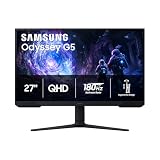
AOC 27" Gaming Monitor QHD 260Hz Overclocked IPS NVIDIA G-SYNC Q27G41ZE
Included for 'Best Gaming Monitor for Battlefield 6: Top Picks' as a relevant option in this category; details come from the product listing.
View on Amazon
AOC 27 Inch Curved Gaming Monitor FHD 280Hz VA 0.3ms HDR, C27G4ZH
Included for 'Best Gaming Monitor for Battlefield 6: Top Picks' because the listing specifies C27G4ZH, details this guide uses to compare options.
View on Amazon
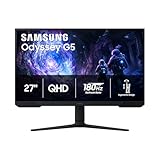
ASUS TUF Gaming VG27AQ3A 27 Inch 1440p 180Hz G-SYNC Gaming Monitor
Included for 'Best Gaming Monitor for Battlefield 6: Top Picks' as a relevant option in this category; details come from the product listing.
View on Amazon
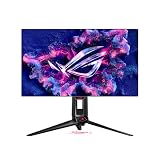
ASUS ROG Strix 26.5” 1440P QD-OLED Gaming Monitor (XG27ACDNG) -QHD (2560x1440), 360Hz, 0.03ms, Custom Heatsink, OLED Care+, G-SYNC Compatible, 99% DCI-P3, DisplayWidget, AI Gaming, 3yr Warranty
Included for 'Best Gaming Monitor for Battlefield 6: Top Picks' because the listing specifies 360Hz and 0.03ms, details this guide uses to compare options.
View on AmazonQuick comparison: the best Battlefield 6 monitors
| Monitor | Resolution and size | Refresh rate | Panel and HDR | Best for | Typical market range |
|---|---|---|---|---|---|
| Alienware AW2725DF | 2560×1440, 27 inches | 360Hz | QD-OLED; excellent contrast and wide color | Competitive 1440p Battlefield players | Usually $700–$900 |
| ASUS ROG Swift PG27UCDM | 3840×2160, 27 inches | 240Hz | QD-OLED; high-contrast HDR | High-end 4K gaming and mixed use | Usually $1,000–$1,300 |
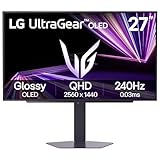
| LG 27GS95QE-B | 2560×1440, 27 inches | 240Hz | OLED; very fast response and strong contrast | Fast 1440p gaming in a dim room | Usually $600–$800 |
| ASUS ROG Strix XG27ACS | 2560×1440, 27 inches | 180Hz | Fast IPS; DisplayHDR 400-class performance | Value-focused 1440p systems | Usually $250–$400 |
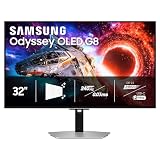
| Samsung Odyssey OLED G8 G80SD | 3840×2160, 32 inches | 240Hz | QD-OLED; expansive 4K HDR image | Large desks and immersive single-player use | Usually $900–$1,300 |
1. Alienware AW2725DF: best overall for competitive 1440p
The Alienware AW2725DF is the strongest all-round pick for Battlefield 6 if your PC targets high frame rates at 1440p. Its 27-inch QHD image is sharp enough for infantry combat without requiring the graphics horsepower of 4K, while its 360Hz refresh rate leaves plenty of headroom for competitive settings.
Its QD-OLED panel provides near-black blacks, extremely fast pixel transitions, and vivid highlights. That combination helps reduce visible smearing when turning quickly, particularly in darker interiors. Battlefield’s HDR presentation can look impressive on OLED, although bright full-screen effects may be less intense than on a high-end mini-LED display.
Why it fits Battlefield 6
- 360Hz refresh is useful when your system frequently produces well over 200 frames per second.
- OLED response times are fast enough that the panel is unlikely to be the limiting factor during rapid camera movement.
- 27 inches keeps the whole image within your central field of view at a normal desk distance.
- 1440p is a practical compromise between distant-target detail and achievable frame rate.
Choose it over a 4K 240Hz monitor if you prioritize competitive responsiveness, use a 27-inch desk setup, or plan to lower visual settings for multiplayer. Its main drawbacks are OLED burn-in management and more modest full-screen brightness than a good mini-LED monitor.
2. ASUS ROG Swift PG27UCDM: best 4K monitor for a high-end PC
The ASUS ROG Swift PG27UCDM is the premium choice for players who want sharper terrain, signage, and distant silhouettes without giving up a very high refresh rate. It combines a 27-inch 4K QD-OLED panel with a 240Hz refresh rate, making it unusually well suited to both competitive Battlefield matches and visually demanding single-player games.
4K places substantially more demand on the graphics card. A 3840×2160 image contains 8.29 million pixels, compared with 3.69 million at 2560×1440. That is about 2.25 times as many pixels, so a graphics card that comfortably drives 200 frames per second at 1440p may not approach 200 fps at 4K.
The PG27UCDM makes the most sense with a high-end GPU and a processor capable of maintaining strong minimum frame rates. If your system regularly falls below the monitor’s refresh range, a less expensive 1440p display may feel smoother in actual play.
Best settings approach
- Use native 4K when image clarity is the priority.
- Use the game’s quality upscaler in a quality mode before dropping the monitor to a lower desktop resolution.
- Enable variable refresh rate, then cap the game a few frames below the monitor’s maximum if you want consistent latency.
- Use HDR for cinematic play, but compare it with SDR in bright multiplayer maps; OLED HDR is strongest with dark scenes and small bright highlights.
3. LG 27GS95QE-B: best fast OLED at 1440p
The LG 27GS95QE-B is a sensible alternative to the Alienware when you want a 240Hz OLED rather than 360Hz. At 1440p, it is easier to drive than 4K and still offers the rapid pixel response that prevents trailing behind moving soldiers or vehicles.
The difference between 240Hz and 360Hz is measurable but smaller than the difference between 60Hz and 144Hz. A 240Hz refresh shows a new frame every 4.17 milliseconds; 360Hz reduces that interval to 2.78 milliseconds. The 1.39-millisecond improvement can matter to highly competitive players, but many users will prefer spending the difference on a faster graphics card or better headset.
This monitor is particularly attractive in a dim or controlled room. OLED contrast makes shadows look deep, but the matte coating and OLED brightness characteristics mean it is not the first choice for a sunlit room with reflections directly on the screen.
4. ASUS ROG Strix XG27ACS: best value for most mid-range PCs
The ASUS ROG Strix XG27ACS is the practical buying choice for players who want a sharp, responsive 1440p monitor without paying OLED prices. Its 180Hz refresh rate is already enough to deliver a major improvement over 60Hz or 75Hz, and its Fast IPS panel avoids OLED burn-in concerns.
Its weakness is HDR. DisplayHDR 400-class IPS monitors typically cannot produce the deep blacks or small bright highlights of OLED and high-zone-count mini-LED displays. Treat HDR as a bonus rather than the reason to buy this model. For Battlefield 6, consistent motion clarity and variable refresh rate are more important than a nominal HDR label.
It is a strong match for a PC that produces roughly 100–180 fps at 1440p, with the exact result varying by GPU, CPU, graphics settings, resolution scaling, and game patches. If your frame rate is usually below 100 fps, a quality 144Hz monitor can also be sufficient.
5. Samsung Odyssey OLED G8 G80SD: best large-screen 4K option
The Samsung Odyssey OLED G8 G80SD is a 32-inch 4K 240Hz QD-OLED monitor for players who sit farther back or want Battlefield to feel more cinematic. The larger panel makes vehicles, aircraft, and wide multiplayer maps more immersive, but it also occupies more desk space and may require greater viewing distance.
At 32 inches, native 4K has a pixel density of about 138 pixels per inch, compared with roughly 163 pixels per inch for 27-inch 4K. The larger screen is less dense but easier to appreciate from a normal gaming distance. It is a better room-and-desk fit than a 27-inch 4K display when you want the image to feel physically substantial rather than extremely compact.
Match the monitor to your setup
| Your situation | Recommended class | Why |
|---|---|---|
| Competitive player, 27-inch desk, high-end 1440p GPU | 27-inch 1440p OLED at 240–360Hz | Excellent motion clarity without the heavy 4K performance cost |
| High-end GPU, image quality matters as much as speed | 27-inch 4K OLED at 240Hz | Very sharp image with competitive refresh capability |
| Mid-range PC, mixed games, bright room | 27-inch 1440p Fast IPS at 165–180Hz | Good value, no burn-in management, practical brightness |
| Large desk, seating 80–100 cm from the screen | 32-inch 4K OLED or mini-LED at 160–240Hz | More immersive view without sitting too close |
| Small desk, close viewing distance | 24–27-inch 1080p or 1440p at 144–240Hz | Fits the field of view and reduces unnecessary GPU load |
How much bandwidth does the monitor connection need?
Uncompressed display bandwidth illustrates why the cable and port matter. For 2560×1440 at 360Hz, the basic active-pixel calculation is:
2,560 × 1,440 × 360 × 24 bits = approximately 31.9 Gbit/s
That figure excludes blanking intervals and transport overhead, so the practical connection requirement is higher. DisplayPort 1.4 with Display Stream Compression is commonly used for this kind of mode. For 3840×2160 at 240Hz:
3,840 × 2,160 × 240 × 24 bits = approximately 47.8 Gbit/s
That is why 4K 240Hz monitors generally rely on HDMI 2.1 or DisplayPort 2.1, depending on the specific model and graphics card. Check the monitor’s manual and your GPU’s outputs before buying; the panel’s maximum refresh rate may require a particular port, cable, color mode, or compression setting.
Recommended Battlefield 6 settings
- Turn on variable refresh rate. Enable Adaptive-Sync, FreeSync, or G-SYNC-compatible mode to reduce tearing when frame rate fluctuates.
- Set a sensible frame cap. For a 240Hz display, try 237 fps; for 180Hz, try 177 fps; for 144Hz, try 141 fps. If your PC cannot maintain those numbers, use a cap it can hold consistently.
- Use native resolution first. At 1440p, reduce demanding effects or use quality upscaling before lowering the output resolution.
- Keep motion blur low or disabled. This preserves clarity during fast turns, while the monitor’s high refresh rate handles motion smoothness.
- Adjust brightness for the room. Do not run OLED brightness at maximum continuously in a dark room; use the monitor’s panel-care features and vary static desktop content.
Final verdict
For the largest number of Battlefield 6 players, the Alienware AW2725DF is the best gaming monitor for Battlefield 6 because 1440p, 27 inches, OLED response, and 360Hz form a balanced competitive package. Choose the ASUS ROG Swift PG27UCDM for premium 4K detail, the Samsung Odyssey OLED G8 G80SD for a larger room-friendly image, the LG 27GS95QE-B for 240Hz 1440p OLED, or the ASUS ROG Strix XG27ACS when value, brightness, and long-term practicality matter more than peak HDR.