Our Top Picks
Frequency response describes how loudly a headset reproduces each pitch from low bass to high treble, and for gamers it matters less as a number on the box than as a curve showing which ranges are emphasized. A listed range such as 20 Hz to 20 kHz only tells you the span the headset can play, not whether it sounds balanced, so the shape of the curve from independent measurements is more useful than the headline figures.
What Frequency Response Means
Sound is vibration measured in hertz (Hz). Low numbers are deep bass, high numbers are treble. Human hearing is commonly described as spanning roughly 20 Hz to 20 kHz, and references on headphones note that claims beyond that, such as 4 Hz to 20 kHz or extended top ends, are usually overstatements at the low end or extend beyond what most people can hear at the high end.
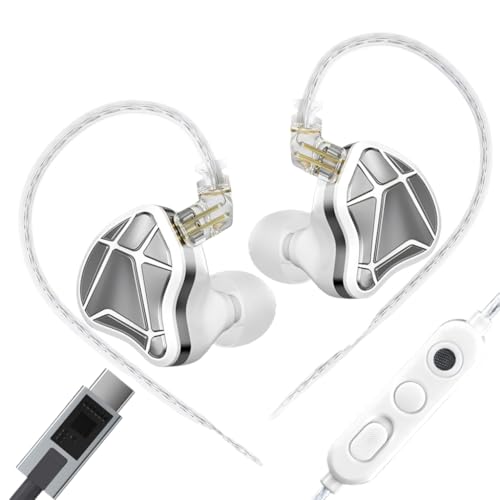
Ergonomic Gaming Headsets With High Sensitivity And Wide Frequency Response
Picked as a relevant option in this category.
View on Amazon
Ergonomic Gaming Headsets With High Sensitivity And Wide Frequency Response
Picked as a relevant option in this category.
View on Amazon
ASUS ROG Kithara Gaming Headset / 100mm HIFIMAN Planar Magnetic Drive Driver/Frequency Response 8Hz - 55Hz / Open Type Design/Full Band MEMS Boom Microphone/Microphone Frequency Response 20Hz
Picked as a relevant option in this category.
View on Amazon
Gaming Headset Voice Microphone with 20 Hz-16 KHz Response | Designed for A30 Gaming Headset Voice Input, 20 Hz-16 KHz Frequency Response, Foam Windscreen for the Mic
Chosen because it specifies Designed for A30 Gaming Headset Voice Input and 20 Hz-16 KHz Frequency Response.
View on AmazonA frequency response graph plots frequency along the bottom and loudness in decibels (dB) up the side. A perfectly flat line would mean every pitch plays at the same level. Real headsets are never flat. They rise and fall, and makers tune them on purpose.
Spec Sheet Range Versus Real Curve
| Item | What it tells you | What it does not tell you |
|---|---|---|
| Listed range, for example 20 Hz to 20 kHz | The span the maker says the headset can reproduce | How loud each region is relative to the others |
| Wider-than-hearing range such as extended bass or treble | Extension beyond the typical hearing band | Whether those extremes are audible or useful |
| Measured graph | The shape: bass boost, dips, treble peaks | Subjective factors like fit and pad seal, which change the curve |
| Target curve comparison | How a headset differs from a reference preference curve | Your personal taste |
The Main Regions of the Curve
| Region | Approximate range | What you hear in games |
|---|---|---|
| Sub-bass | About 20 to 60 Hz | Rumble, deep explosions, engine drone |
| Bass | About 60 to 250 Hz | Weight of gunfire, impacts, kick drums |
| Midrange | About 250 Hz to 2 kHz | Voices, dialogue, many sound effects |
| Upper mids | About 2 to 5 kHz | Clarity, voice intelligibility, details like footsteps and reloads |
| Treble | About 5 to 20 kHz | Air, sparkle, hiss, sharp effects |
These boundaries are approximations used for explanation, and different sources draw the lines slightly differently.
Why the Shape Matters for Gaming
Bass emphasis
Many gaming headsets are tuned with extra bass to add impact to explosions and engines. It can feel exciting in action games. Too much low-end can blur the lower midrange and mask quieter sounds such as distant footsteps, which is why some players prefer a flatter or less bass-heavy tuning for competitive shooters.
Midrange clarity
Voices and a lot of in-game sound live in the midrange. A recessed midrange can make dialogue and teammates sound distant, while a balanced one keeps voices natural.
Upper-mid and treble detail
The upper mids and treble carry much of the detail that helps you localize sounds. A modest lift can improve clarity, but strong peaks can sound harsh or fatiguing during long sessions, and sibilance (sharp “s” sounds) can become tiresome.
Preference targets
Reviewers often compare headphones to a reference such as the Harman target, a curve developed from listener preference research. A close match is generally considered a good starting point, but taste varies, and some gamers deliberately favor more bass or more treble. Treat targets as a guide, not a rule.
Why Two Headsets With the Same Range Sound Different
- Tuning: makers choose where to boost or cut, so identical 20 Hz to 20 kHz specs hide very different curves.
- Ear pad seal: a poor seal lowers bass. Glasses, hair and head shape can change the result.
- Driver type and size: influence distortion and low-frequency capability, but size alone does not determine tone.
- Closed-back versus open-back: open designs often have less bass impact but a more spacious feel.
- Software and equalizers: maker apps can add presets that change the curve.
- Virtual surround: processing may alter the frequency balance, so compare with it off and on.
How to Read a Frequency Response Graph
- Look at the overall tilt. Is the left (bass) side higher than the middle, or the right (treble) higher?
- Find big peaks and dips. A narrow spike in the treble can create harshness, while a dip in the mids can make voices thin.
- Compare with a target or a headset you know well, and note where they differ.
- Be careful with the extreme low and high ends. Measurement and fit can change those areas a lot.
- Remember the measurement conditions. Graphs are measured on a test fixture and may differ on a real head.
Quick Guide: Setting and Result
| If you want | Look for | Adjust with |
|---|---|---|
| Clearer footsteps and cues | Balanced or slightly lifted upper mids | An equalizer, gentle boost, modest amounts |
| Cinematic impact | Stronger bass shelf | Bass presets, or a pad with a good seal |
| Less fatigue | No sharp treble peaks | Gentle treble reduction |
| Clear team chat | Present midrange | Separate chat volume if the software supports it |
| A neutral reference sound | Close to a published target curve | Avoid heavy presets |
Frequency Response and the Microphone
Headset mics have their own frequency response, usually narrower than the speakers, since voices sit mostly in the mid and upper mid range. A listed mic range is a rough indicator only. Recorded samples from reviewers tell you more about how your voice will sound.
Common Mistakes
- Buying on the widest listed range. Extra extension outside audible hearing adds little.
- Judging a headset only by its bass amount.
- Ignoring fit, since a poor pad seal changes the bass more than a driver difference.
- Stacking several sound boosts at once, such as bass boost, surround and a loudness mode, leading to distortion or fatigue.
- Expecting a graph to predict taste. It helps, but your own listening matters.
- Comparing graphs from different measurement setups as though they were identical.
Using an Equalizer Sensibly
If a headset sounds too bassy or too bright, a modest equalizer adjustment can help. Make small changes, about a few decibels at a time, and avoid large boosts which can cause distortion and reduce headroom. Many headset makers provide software with presets and custom bands, and operating systems and some audio tools include equalizers as well. Reset to flat and test again if things sound off.
Frequently Asked Questions
What is a good frequency response for a gaming headset?
A range spanning about 20 Hz to 20 kHz is typical, but the shape matters more than the numbers. Look for a balanced curve without sharp treble peaks or an overwhelming bass hump, unless you prefer that sound. Independent measurements are more informative than the spec sheet.
Does a wider frequency range mean better sound?
Not necessarily. Extension past the range of human hearing adds little you can perceive. A headset with a narrower listed range but a well-balanced curve can sound better than one with a wide range and an uneven curve.
Which frequencies help me hear footsteps?
Detail like footsteps and reloads tends to sit in the midrange and upper midrange into the lower treble, with the weight of the sound in the bass. Excessive bass can mask them, so a balanced tuning with clear upper mids is often preferred in competitive play. Exact preference varies.
Can I change my headset’s frequency response?
You can adjust it with an equalizer in the maker’s software, the operating system or a third-party tool, and with different ear pads. Keep changes modest and avoid large boosts that may cause distortion. Reset to default if sound quality suffers.
Why does the same headset sound different on my head?
Fit, pad seal, glasses, hair and head shape all change the response, mostly in the bass. Measurements come from a test fixture, so real-world results vary. Adjust the headset position and try different pads to improve the seal.
Is frequency response the same as sound quality?
No. It is one part of the picture. Distortion, imaging, soundstage, comfort and the microphone also affect the experience, so use frequency response as one input.
FAQ
What is a good frequency response for a gaming headset?
Does a wider frequency range mean better sound?
Which frequencies help me hear footsteps?
Can I change my headset’s frequency response?
Why does the same headset sound different on my head?
Is frequency response the same as sound quality?
More from Amazon
Programs that pair well with the guide above. Offers and eligibility are set by Amazon and may change.
Free shipping on eligible items, Prime Video and more. Eligible new members can start with a free trial.
Start a Prime free trialAd-free music streaming. Eligible new subscribers can start with a free trial.
Try Music Unlimited freeA Prime membership for ages 18-24 with a trial period. Eligibility is set by Amazon.
See Prime for Young AdultsAudiobooks and podcasts to listen to on the go. Eligible new members can start with a free trial.
Try Audible freeAs an Amazon Associate we earn from qualifying purchases.