Key takeaways
- Ray tracing: NVIDIA’s dedicated RT hardware delivers noticeably better ray-traced performance, while AMD has improved but still trails in heavy RT titles.
- Upscaling: NVIDIA’s DLSS is widely regarded as the highest-quality upscaler; AMD’s FSR works on a broader range of hardware including competitor cards.
- Frame generation: NVIDIA offers mature multi-frame generation on its latest cards, while AMD’s frame generation and Fluid Motion Frames run on more hardware.
- VRAM and value: AMD often provides more VRAM at a given price and strong raw rasterization, making it attractive for high-resolution value builds.
- Software and creators: NVIDIA’s CUDA ecosystem and broad app support give it an edge for creative and AI workloads.
- Efficiency and drivers: Both have solid drivers today; efficiency varies by specific model, so compare the exact cards you are considering.
The graphics card is the heart of any gaming PC, and the NVIDIA versus AMD rivalry defines what you get for your money. NVIDIA leads on ray tracing, DLSS upscaling, and its mature software ecosystem, while AMD’s Radeon cards counter with strong raw rasterization performance and aggressive pricing, plus a broadly compatible FSR.
In 2026 the choice is genuinely competitive across every price tier, and the best pick depends on the features you value and the games you play. This comparison lays out where each brand shines, from ray-traced eye candy to frames per dollar, so you can choose the GPU that matches your priorities.
Our top picks
 iBUYPOWER Element SE Gaming PC Desktop Computer
- AMD Ryzen 5 8400F, NVIDIA GeForce RTX 3050…
- Connectivity: 6 x USB 3.1 | 1x RJ-45…
- Special Add-Ons: Tempered Glass RGB Gaming Case |…
 iBUYPOWER Element Gaming PC Desktop Computer AMD
- AMD Ryzen 9 7900X, NVIDIA GeForce RTX 5070…
- Connectivity: 6 x USB 3.1 | 1x RJ-45…
- Special Add-Ons: Tempered Glass RGB Gaming Case |…
 ZOTAC MEK Gaming PC Desktop
- Effortless Gaming: MEK from ZOTAC comes with all…
- Heart of the MEK: the ZOTAC GAMING GeForce…
- Powerful Processor: the AMD Ryzen 7 9800X3D AM5…
| Product | Key specs | |
|---|---|---|
| iBUYPOWER Element SE Gaming PC Desktop Computer | AMD Ryzen 5 8400F, NVIDIA GeForce RTX 3050… Connectivity: 6 x USB 3.1 | 1x RJ-45… Special Add-Ons: Tempered Glass RGB Gaming Case |… | Check price |
| iBUYPOWER Element Gaming PC Desktop Computer AMD | AMD Ryzen 9 7900X, NVIDIA GeForce RTX 5070… Connectivity: 6 x USB 3.1 | 1x RJ-45… Special Add-Ons: Tempered Glass RGB Gaming Case |… | Check price |
| ZOTAC MEK Gaming PC Desktop | Effortless Gaming: MEK from ZOTAC comes with all… Heart of the MEK: the ZOTAC GAMING GeForce… Powerful Processor: the AMD Ryzen 7 9800X3D AM5… | Check price |
 Acer Nitro 16S AI Copilot+ PC Gaming | Unlock Transformational AI PC Experiences: Dive into a… Unleash Next-Gen Performance: Driven by the advanced 10-core… Game Changer: Powered by NVIDIA Blackwell architecture, GeForce… | Check price |
 msi Vector A18 HX 18” 240Hz QHD+ | Check price | |
 Advanced GPU Assembly Programming Third Edition: A | Check price | |
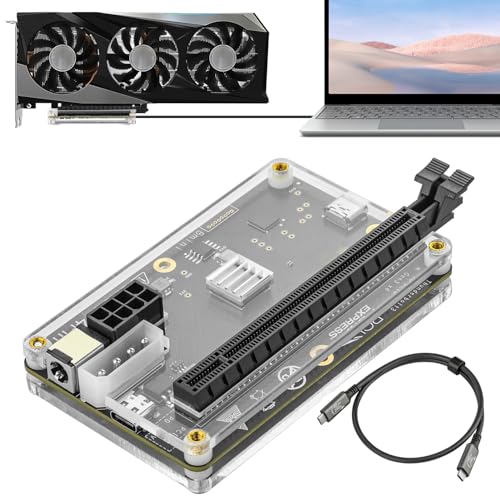 PCIE 3.0 x16 22Gbps eGPU DOCK | Check price | |
 SEASONIC Focus V4 GX-750-750W | High Efficiency, 80 PLUS Gold Certified ATX 3 and 16-Pin PCIe Gen 5 Cable… OptiSink Design | Check price |
As an Amazon Associate we earn from qualifying purchases at no extra cost to you.
⚡ Save on Your Next PC — Amazon Prime
Prime members get fast free shipping on the systems above, plus early access to Prime Day & Black Friday PC deals. New members get a 30-day free trial.
Watch: NVIDIA vs AMD GPUs in 2026 — Video Review
Quick Verdict
NVIDIA is the choice for ray tracing, the best upscaling with DLSS, and features like the most mature frame generation and creator tools. AMD counters with excellent traditional rasterization performance and typically more VRAM and raw frames for the money. If you want cutting-edge ray tracing and DLSS, go NVIDIA; if you want the most rasterized performance per dollar, AMD is compelling.
Key Differences
- Ray tracing: NVIDIA’s dedicated RT hardware delivers noticeably better ray-traced performance, while AMD has improved but still trails in heavy RT titles.
- Upscaling: NVIDIA’s DLSS is widely regarded as the highest-quality upscaler; AMD’s FSR works on a broader range of hardware including competitor cards.
- Frame generation: NVIDIA offers mature multi-frame generation on its latest cards, while AMD’s frame generation and Fluid Motion Frames run on more hardware.
- VRAM and value: AMD often provides more VRAM at a given price and strong raw rasterization, making it attractive for high-resolution value builds.
- Software and creators: NVIDIA’s CUDA ecosystem and broad app support give it an edge for creative and AI workloads.
- Efficiency and drivers: Both have solid drivers today; efficiency varies by specific model, so compare the exact cards you are considering.
NVIDIA (GeForce RTX)
NVIDIA’s GeForce RTX cards are the feature leaders. Their ray tracing hardware handles the most demanding RT games far better, and DLSS remains the gold standard for upscaling image quality, with multi-frame generation on the latest generation pushing frame rates dramatically higher in supported titles. Prebuilts and laptops built around RTX 5070, 5080, and higher, from iBUYPOWER and ZOTAC MEK desktops to MSI Vector gaming laptops, showcase this at every tier.
Beyond gaming, NVIDIA’s CUDA ecosystem makes its cards the default for video editing, 3D rendering, and AI workloads thanks to broad software support. The trade-off is that NVIDIA cards often cost more at a given performance level and sometimes offer less VRAM than comparable Radeon cards. For buyers who want the best ray tracing, upscaling, and creator support, NVIDIA is the premium pick.
AMD (Radeon RX)
AMD’s Radeon RX cards make their case with raw rasterization performance and value. At many price points a Radeon card delivers more traditional (non-ray-traced) frames and more VRAM for the money, which matters for high-resolution gaming and future-proofing as games grow more memory-hungry. FSR upscaling and frame generation are open and work across a wide range of GPUs, including some non-AMD hardware.
AMD has closed much of the gap in ray tracing with newer architectures, though it still trails NVIDIA in the heaviest RT scenes. Radeon-based systems, including AMD Ryzen plus Radeon prebuilts and laptops, offer excellent all-round gaming value. For players who prioritize rasterized frame rates, generous VRAM, and price over cutting-edge ray tracing, AMD is the smart-money choice.
Which Should You Buy?
- Choose NVIDIA if ray tracing, the best DLSS upscaling, and mature frame generation matter most to you.
- Choose AMD if you want the most rasterized frames and VRAM per dollar for high-resolution gaming.
- Choose NVIDIA if you also do video editing, 3D, or AI work that leans on CUDA.
- Choose AMD for strong value builds where cutting-edge ray tracing is a lower priority.
- Compare the specific models in your budget, since the winner changes tier by tier.
Frequently Asked Questions
Is NVIDIA or AMD better for ray tracing?
NVIDIA leads in ray tracing thanks to more capable dedicated RT hardware and DLSS, delivering better performance in heavy ray-traced games. AMD has improved significantly but still trails in the most demanding RT titles.
Does AMD give more VRAM for the money?
Often yes. At many price points Radeon cards include more VRAM than comparable GeForce cards, which benefits high-resolution gaming and games with large texture packs as memory demands rise.
Is DLSS better than FSR?
DLSS is generally considered the higher-quality upscaler, especially in image sharpness and stability. FSR’s advantage is compatibility, since it runs on a much wider range of GPUs including older and non-AMD cards.
Which brand is better for content creation?
NVIDIA has the edge for creators because its CUDA ecosystem is broadly supported across editing, rendering, and AI applications, so exports and effects are often faster on GeForce cards.
Final Verdict
Both brands make excellent GPUs in 2026, and the right one depends on your priorities. Pick NVIDIA for the best ray tracing, DLSS upscaling, and creator and AI support; pick AMD for the most rasterized performance and VRAM per dollar. Decide which features you actually use, compare the specific cards in your budget, and either choice will deliver years of great gaming.
FAQ
Is NVIDIA or AMD better for ray tracing?
Does AMD give more VRAM for the money?
Is DLSS better than FSR?
Which brand is better for content creation?
More from Amazon
Programs that pair well with the guide above. Offers and eligibility are set by Amazon and may change.
Free shipping on eligible items, Prime Video and more. Eligible new members can start with a free trial.
Start a Prime free trialAd-free music streaming. Eligible new subscribers can start with a free trial.
Try Music Unlimited freeA Prime membership for ages 18-24 with a trial period. Eligibility is set by Amazon.
See Prime for Young AdultsAudiobooks and podcasts to listen to on the go. Eligible new members can start with a free trial.
Try Audible freeAs an Amazon Associate we earn from qualifying purchases.