Key takeaways
- Freedom of movement: Wireless lets you stand, stretch, and roam, while wired keeps you tethered within cable reach of your device.
- Latency: Wired is inherently instant; quality 2.4GHz wireless is nearly lag-free, though basic Bluetooth can lag for gaming.
- Battery: Wired never needs charging, whereas wireless requires topping up, now often only every 40 to 100 hours.
- Price: Wired headsets deliver more audio quality per dollar, while wireless adds cost for the radio and battery.
- Multi-platform use: Many wireless models mix 2.4GHz and Bluetooth for PC, console, and phone, as on the Turtle Beach Stealth 600.
- Sound consistency: Wired avoids any wireless interference, while good wireless designs minimize it but never fully eliminate the risk.
What's inside
Few peripheral debates split gamers like the headset question. A wired gaming headset plugs straight into your PC or controller for pure, uninterrupted audio and no battery to manage, while a wireless gaming headset cuts the cord with 2.4GHz or Bluetooth for freedom to move, stretch, and grab a drink without yanking your head sideways. Both can sound superb in 2026, but they serve different lifestyles.
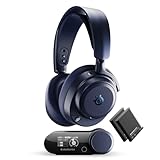
This matters because audio is a genuine competitive tool, and comfort over long sessions makes or breaks the experience. Long-lasting wireless models like the SteelSeries Arctis Nova 7P with 50-plus hours and the 100-hour NUBWO wireless headset have erased old battery anxiety, pushing the choice toward how you play rather than whether wireless can keep up.
As an Amazon Associate we earn from qualifying purchases at no extra cost to you. Product prices and availability are accurate as of the date shown and are subject to change.


⚡ Save on Your Next PC — Amazon Prime
Prime members get fast free shipping on the systems above, plus early access to Prime Day & Black Friday PC deals. New members get a 30-day free trial.
Watch: Wireless vs Wired Gaming Headset in 2026 — Video Review
Quick Verdict
Pick a wired headset if you want the lowest price, zero latency worries, and never charging a battery, especially for stationary competitive play. Pick wireless if you value freedom to move around your space, hate cables snagging on your chair, and want multi-platform flexibility, with modern battery life removing the main old objection.
Key Differences
- Freedom of movement: Wireless lets you stand, stretch, and roam, while wired keeps you tethered within cable reach of your device.
- Latency: Wired is inherently instant; quality 2.4GHz wireless is nearly lag-free, though basic Bluetooth can lag for gaming.
- Battery: Wired never needs charging, whereas wireless requires topping up, now often only every 40 to 100 hours.
- Price: Wired headsets deliver more audio quality per dollar, while wireless adds cost for the radio and battery.
- Multi-platform use: Many wireless models mix 2.4GHz and Bluetooth for PC, console, and phone, as on the Turtle Beach Stealth 600.
- Sound consistency: Wired avoids any wireless interference, while good wireless designs minimize it but never fully eliminate the risk.
Wired Headsets: Pure Audio, No Upkeep
A wired gaming headset is the uncomplicated choice for players who want sound and nothing to manage. Audio travels down a direct connection with zero latency and no risk of wireless interference, so competitive players who sit still anyway get a clean, dependable signal every session. There is no pairing, no charging, and no chance of the headset dying mid-match at the worst moment.
Value is the other big draw. Without a radio and battery to fund, wired headsets can invest in bigger drivers, better microphones, and sturdier build at a given price, so you often hear more detail for less money. The obvious limit is the cable, which restricts movement and can snag on your chair, but for a fixed battlestation that trade is easy to accept.
Wireless Headsets: Freedom and Flexibility
A wireless gaming headset is about breaking free of the cord. Whether you pace during tense rounds, lean back on the couch, or step away between matches, nothing tugs at your head, and no cable tangles in your chair arms. Models like the SteelSeries Arctis Nova 7P and the Turtle Beach Stealth 600 add multi-platform support, hopping between PC, console, and phone so one headset covers everything.
Battery life, once the dealbreaker, is largely solved. Many wireless headsets now run 40 to 100 hours per charge and support play-and-charge, so you rarely feel the limit. You pay a premium and must remember to top up occasionally, but for players who value comfort and mobility, or who game across several devices, the freedom is well worth it.
Which Should You Buy?
- For competitive stationary play: pick wired because zero latency and no charging keep you focused and reliable.
- For freedom to move around: pick wireless so you can stand, stretch, and roam without a cable.
- For the tightest budget: pick wired to get the best sound quality for the money.
- For multi-device gaming: pick a wireless headset with 2.4GHz and Bluetooth to cover PC, console, and phone.
- For all-day comfort and convenience: pick wireless with long battery life and play-and-charge to avoid downtime.
Frequently Asked Questions
Do wireless headsets have too much lag for competitive gaming?
Not on a good 2.4GHz connection, which is effectively lag-free for gaming. Only standard Bluetooth introduces noticeable delay, so use the dongle mode for competitive play.
How often will I need to charge a wireless headset?
It depends on the model, but many last 40 to 100 hours per charge. With play-and-charge support you can keep gaming while it powers up, so downtime is minimal.
Is wired audio quality really better than wireless?
At the same price, wired often sounds slightly better because more budget goes to the drivers and mic. At higher price points, premium wireless closes the gap almost entirely.
Can one wireless headset work on PC and console?
Many can, especially models with both a 2.4GHz dongle and Bluetooth. Check platform compatibility before buying, since some headsets support Xbox or PlayStation but not both.
Final Verdict
In 2026 wired headsets remain the value and reliability champions for stationary competitive players, while wireless has matured enough in battery life and latency that anyone craving freedom and multi-device flexibility can go cordless without meaningful compromise, making the right pick a question of lifestyle rather than performance.