Key takeaways
- Trust modern 2.4GHz gaming wireless for low latency, but avoid Bluetooth for fast-paced games.
- Choose wired if you dislike managing battery charge or forget to recharge devices.
- Prioritize wireless for your mouse first, where cable drag most affects performance.
- Pick wired peripherals when budget is tight, since they cost less for the same performance.
What's inside
- Watch: Wired vs Wireless Gaming Gear: Which Is Better? — Video Review
- Latency: The Old Argument, Revisited
- Battery Life and Maintenance
- Freedom, Clutter, and Comfort
- Cost and Value Over Time
- Choosing Per Device, Not Per Camp
- Tips
- Related Guides
- Frequently Asked Questions
- Conclusion
- Related Articles
- Related Guides
For years the answer was simple: serious gamers went wired for reliable, lag-free performance. But wireless technology has advanced so far that the debate is genuinely open in 2026, and top esports professionals now compete with wireless mice. Yet cables have not disappeared, and for good reason. Deciding between wired and wireless gear is no longer about which is objectively better, but about which trade-offs match how you play.
- Watch: Wired vs Wireless Gaming Gear: Which Is Better? — Video Review
- Latency: The Old Argument, Revisited
- Battery Life and Maintenance
- Freedom, Clutter, and Comfort
- Cost and Value Over Time
- Choosing Per Device, Not Per Camp
- Tips
- Related Guides
- Frequently Asked Questions
- Conclusion
- Related Articles
- Related Guides
This guide compares the two across the factors that actually matter: latency, battery and maintenance, cost, freedom of movement, and long-term value. You will learn where modern wireless truly rivals wired, where cables still hold an edge, and how to decide for each piece of gear rather than blindly picking one camp.
As an Amazon Associate we earn from qualifying purchases at no extra cost to you. Product prices and availability are accurate as of the date shown and are subject to change.




⚡ Save on Your Next PC — Amazon Prime
Prime members get fast free shipping on the systems above, plus early access to Prime Day & Black Friday PC deals. New members get a 30-day free trial.
Watch: Wired vs Wireless Gaming Gear: Which Is Better? — Video Review
Latency: The Old Argument, Revisited
Latency was once the deciding factor, and wired always won. Today, dedicated low-latency wireless like Logitech’s Lightspeed, used in mice such as the G305 Lightspeed and G502 Lightspeed, delivers response times indistinguishable from a cable for nearly all players. Bluetooth remains too slow for fast gaming, but a proper 2.4GHz gaming dongle, like the one in the Razer Basilisk V3 X HyperSpeed, closes the gap. For most gamers, latency is no longer a reason to avoid wireless.
Battery Life and Maintenance
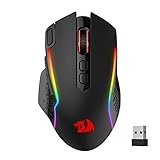
The real cost of wireless is upkeep. A cable never needs charging, while a wireless mouse like the Redragon M810 PRO or Razer Viper V3 HyperSpeed requires you to remember to top it up or swap batteries. Modern gaming mice offer long battery life and quick-charge options, but the mental overhead is real. If you hate managing charge levels or forget easily, a wired peripheral removes that friction entirely.
Freedom, Clutter, and Comfort
This is where wireless shines. Without a cable dragging across your desk, a wireless mouse glides freely and your setup stays clean. A lightweight wireless mouse such as the Razer Viper V3 HyperSpeed at 82g feels effortless in fast play, with no cable tug to fight. If cable drag or desk clutter annoys you, or you game from a couch, wireless transforms the experience in a way specs alone do not capture.
Cost and Value Over Time
Wired gear almost always costs less for equivalent performance, since you are not paying for radios and batteries. A wired mouse or the wired variant of a headset gives you more raw performance per dollar. Wireless commands a premium, and batteries do degrade over years of use. If budget is your priority, wired stretches your money further, while wireless asks you to pay extra for convenience and a tidier desk.
Choosing Per Device, Not Per Camp
The smartest approach is to decide device by device. A wireless mouse offers the clearest benefit because the cable directly affects aim and movement, which is why options like the Logitech G703 Lightspeed and G PRO X2 are popular. A keyboard, which stays put, gains less from going wireless, so a cable there costs you little. Mix and match: go wireless where freedom matters most and wired where it barely matters.
Tips
- Trust modern 2.4GHz gaming wireless for low latency, but avoid Bluetooth for fast-paced games.
- Choose wired if you dislike managing battery charge or forget to recharge devices.
- Prioritize wireless for your mouse first, where cable drag most affects performance.
- Pick wired peripherals when budget is tight, since they cost less for the same performance.
Frequently Asked Questions
Is wireless gaming gear still slower than wired?
For practical purposes, no. Dedicated 2.4GHz gaming wireless like Lightspeed and HyperSpeed delivers latency indistinguishable from a cable for nearly all players. Only Bluetooth remains too slow for competitive fast-paced games.
What is the biggest downside of wireless?
Maintenance. You have to keep the device charged, and batteries degrade over years of use. Wireless also costs more for equivalent performance. If you dislike managing charge, wired removes that concern.
Which device benefits most from going wireless?
The mouse. A cable directly affects aiming and movement, so removing it has the most noticeable impact. Keyboards, which stay in one place, gain far less from being wireless.
Is wired gear better value?
Generally yes. Because it has no radios or batteries, wired gear costs less for the same performance and never needs charging. Wireless charges a premium for convenience and a clutter-free desk.
Conclusion
The wired versus wireless question no longer has one right answer. Modern gaming wireless has closed the latency gap, so the real decision comes down to whether you value freedom and a clean desk enough to pay more and manage batteries. Choose per device, going wireless for your mouse and wired where cables barely matter, and you will build a setup that fits exactly how you play.