Key takeaways
- Consistent 12GB GDDR7 across all partner models
- Strong 1440p performance with DLSS 4 support
- Cooling and size choices for nearly any build
- Factory overclocks on OC editions for extra frames
What's inside
The NVIDIA RTX 5070 has quickly become the go-to graphics card for high-refresh 1440p gaming, and board partners have flooded the market with distinct takes on the same Blackwell GPU. Picking the right one comes down to cooling, size, clock speeds, and how well a card fits your case.
We compared the most popular RTX 5070 partner cards from PNY, MSI, ASUS, GIGABYTE, and ZOTAC to help you choose the version that best matches your build. Here’s what separates them.
As an Amazon Associate we earn from qualifying purchases at no extra cost to you. Product prices and availability are accurate as of the date shown and are subject to change.


🎮 Get More From Your Setup — Free
Prime Gaming gives you free PC games every month, in-game loot, and a free Twitch channel sub — plus fast free shipping on all the gear above. New members get a 30-day free trial.
Watch: Nvidia Rtx 5070 Graphics Cards: Review & Buyer’s Guide — Video Review
Design & Build
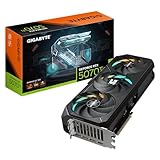
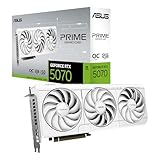
Every RTX 5070 here carries 12GB of GDDR7 on a 192-bit bus, but the physical designs diverge sharply. The ASUS TUF Gaming RTX 5070 is the tank of the group, with a robust 3.125-slot cooler, military-grade components, and protective PCB coating for buyers who prize durability and low temperatures. The MSI Ventus 2X and GIGABYTE AERO OC take a more compact dual-fan approach, with the AERO’s white shell aimed at clean, bright builds. The PNY Triple Fan and ZOTAC Solid Triple Fan split the difference, and the MSI Gaming Trio OC brings the highest factory boost at 2625MHz for enthusiasts chasing every frame.
Performance
Out of the box, clock speeds set these cards apart. The MSI Gaming Trio OC leads at 2625MHz, followed closely by the PNY OC at 2587MHz and the MSI Ventus 2X OC at 2542MHz, differences that translate to only a handful of frames but matter to overclockers. All of them deliver excellent 1440p performance with DLSS 4 and Blackwell’s ray-tracing improvements. The bigger practical difference is cooling: triple-fan and 3-slot designs like the ASUS TUF run quieter and cooler under sustained load, while the compact Ventus 2X trades a little thermal headroom for a smaller footprint that fits more cases.
Pros & Cons
- Consistent 12GB GDDR7 across all partner models
- Strong 1440p performance with DLSS 4 support
- Cooling and size choices for nearly any build
- Factory overclocks on OC editions for extra frames
- Larger 3-slot cards won’t fit compact cases
- Clock-speed gains between models are marginal
Alternatives to Consider
If you want the smallest possible card, look at SFF-ready designs or the compact ZOTAC Solid for tight builds. Enthusiasts chasing maximum out-of-box speed should target the MSI Gaming Trio OC, while builders who value long-term reliability and quiet operation will gravitate to the ASUS TUF Gaming model. Those wanting a white-themed build will appreciate the GIGABYTE AERO OC.
Frequently Asked Questions
Does the brand of RTX 5070 matter for performance?
Only slightly. All share the same GPU and 12GB of GDDR7, so real-world frame differences from factory overclocks are small; cooling, noise, and size are the more meaningful distinctions.
Which RTX 5070 is best for a small case?
Compact dual-fan models like the MSI Ventus 2X or SFF-ready designs fit tighter builds, whereas 3-slot cards like the ASUS TUF need a roomier chassis.
Is 12GB of VRAM enough for the RTX 5070?
For its target 1440p resolution, 12GB is well suited and handles current games comfortably, though very high-res texture packs can push it.
Do I need the highest factory overclock?
Not really. The frame difference between OC editions is minor, so prioritize a cooler that runs quiet and fits your case over chasing the top clock.
Verdict
For most builders, the ASUS TUF Gaming RTX 5070 is the best all-round choice thanks to its excellent cooling and durability, while the MSI Ventus 2X wins for compact builds and the MSI Gaming Trio OC suits overclockers. Any of these delivers superb 1440p gaming.