Key takeaways
- Immersion: Curved panels bend the edges toward you for a more enveloping field of view, while flat screens present a flatter, more detached image.
- Geometric accuracy: Flat monitors keep straight lines truly straight, which matters for design work and precise aiming references.
- Ideal size: Curves shine at 27 inches and up, especially ultrawide, whereas flat works well at any size including smaller esports panels.
- Viewing distance: Curved rewards a close, centered seating position; flat tolerates off-angle and shared viewing far better.
- Multi-monitor use: Flat panels tile cleanly side by side, while curved screens create awkward gaps when grouped.
- Price and availability: Both are affordable now, but high-curvature immersive models like 1500R and 1000R panels command a modest premium at large sizes.
What's inside
Walk into any gaming setup showcase in 2026 and you will see the desk split down the middle: sweeping curved panels on one side, crisp flat screens on the other. A curved gaming monitor gently wraps the image toward your eyes to fill more of your peripheral vision, while a flat monitor keeps every pixel on a single true plane for geometric accuracy. Neither is a gimmick anymore, but they chase very different priorities.
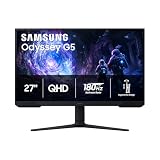
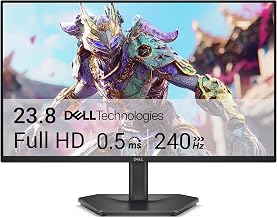
The choice matters because monitors have gotten cheap enough to be immersive without compromise, and screen sizes keep growing. A curved 32-inch VA like the SANSUI 32 Inch Curved 240Hz feels enveloping, while a flat panel such as the Samsung Essential S3 stays predictable and easy to align with multi-monitor setups. Getting this decision right shapes comfort, immersion, and competitive precision for years.
As an Amazon Associate we earn from qualifying purchases at no extra cost to you. Product prices and availability are accurate as of the date shown and are subject to change.


⚡ Save on Your Next PC — Amazon Prime
Prime members get fast free shipping on the systems above, plus early access to Prime Day & Black Friday PC deals. New members get a 30-day free trial.
Watch: Curved vs Flat Gaming Monitor: 2026 Guide — Video Review
Quick Verdict
Choose a curved monitor if you want maximum immersion on a large single screen, sit fairly close, and play cinematic or open-world games where wrap-around depth pulls you in. Choose flat if you prioritize competitive accuracy, plan to run dual or triple monitors, or do design and creative work where straight lines must stay perfectly straight.
Key Differences
- Immersion: Curved panels bend the edges toward you for a more enveloping field of view, while flat screens present a flatter, more detached image.
- Geometric accuracy: Flat monitors keep straight lines truly straight, which matters for design work and precise aiming references.
- Ideal size: Curves shine at 27 inches and up, especially ultrawide, whereas flat works well at any size including smaller esports panels.
- Viewing distance: Curved rewards a close, centered seating position; flat tolerates off-angle and shared viewing far better.
- Multi-monitor use: Flat panels tile cleanly side by side, while curved screens create awkward gaps when grouped.
- Price and availability: Both are affordable now, but high-curvature immersive models like 1500R and 1000R panels command a modest premium at large sizes.
Curved Monitors: Immersion That Wraps Around You
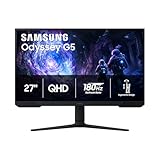
A curved gaming monitor earns its keep in atmosphere. By angling the edges of the panel toward your face, models like the 32-Inch 240Hz Curved VA and the Samsung Odyssey G55C keep more of the picture at a consistent distance from your eyes, which can reduce edge distortion on big screens and make sprawling worlds feel like they surround you. For racing sims, RPGs, and single-player epics, that sense of depth is genuinely addictive.
Curves also help with large-panel ergonomics. On a wide screen the far corners of a flat display sit noticeably farther away and at a sharper angle, forcing more eye movement, while a curve softens that geometry. The trade-off is that you need to sit centered and reasonably close to get the benefit, so a curved panel is happiest as a personal, single-user cockpit rather than a shared screen.
Flat Monitors: Precision and Predictability
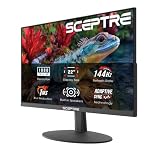
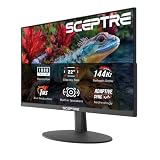
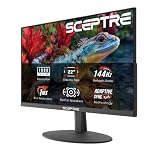
A flat gaming monitor is the choice of purists and competitors because what you see is exactly what the game renders, with no bend to interpret. Straight lines stay straight, which keeps aiming references honest and makes flat panels the default for creative work like photo editing, CAD, and UI design. Compact flat options such as the Sceptre Curved-alternative style 24-inch class remain esports favorites for a reason.
Flat also wins on flexibility. It looks correct from off-angle, shares well when a friend leans in, and tiles perfectly into dual or triple setups without the gaps and mismatched geometry curves create. If your desk is destined to grow into a multi-monitor array, or you simply want a no-nonsense panel that behaves the same for gaming and productivity, flat is the safe, versatile pick.
Which Should You Buy?
- For single-screen immersion: pick curved because the wrap-around depth transforms big-screen cinematic and open-world play.
- For competitive esports accuracy: pick flat, since undistorted geometry keeps aim references consistent and reliable.
- For multi-monitor setups: pick flat because panels tile cleanly without gaps or angle mismatches.
- For creative and design work: pick flat so straight lines and proportions stay perfectly accurate.
- For ultrawide sim racing or flight: pick curved, where the enveloping field of view genuinely boosts the cockpit feel.
Frequently Asked Questions
Are curved monitors bad for competitive gaming?
Not bad, but flat has a slight edge. The curve can subtly alter how you read straight-line references, so many competitive players stick with flat panels for the most predictable aiming experience.
What curvature rating should I look for?
Lower numbers mean a more aggressive curve. A 1500R panel is a gentle, comfortable wrap suited to most desks, while 1000R is more immersive and best for large or ultrawide screens viewed up close.
Do curved monitors cause eye strain?
For most people they reduce it on large screens by keeping edges at a more even distance, provided you sit centered. Sitting off-center or too far back can make the curve feel unnatural.
Can I use a curved monitor for work?
Yes, especially for text and spreadsheets across a wide panel. The main exception is precise design work involving straight lines, where a flat screen keeps geometry accurate.
Final Verdict
In 2026 the honest answer is that curved wins immersion on a single large screen while flat wins precision, flexibility, and multi-monitor scaling, so match the panel to how you actually play rather than to the hype, and both deliver a superb high-refresh experience.