Key takeaways
- Fastest available: Every 5090 delivers class-leading gaming performance.
- Huge VRAM: 32GB handles 4K, AI, and heavy content work.
- Cooling variety: Air, liquid, and external box options.
- Strong warranties: Most partners offer three-year coverage.
What's inside
The gap between the RTX 5090’s MSRP and its real-world price has been a hot topic since launch, and understanding what drives that difference is key to buying smart. NVIDIA sets a reference figure, but board partners add premium coolers, factory overclocks, and warranties that push actual prices higher, especially for the most elaborate designs.
This review breaks down the leading RTX 5090 cards on Amazon, from air-cooled workhorses to liquid-cooled flagships and even an external GPU box, so you can weigh what the premium buys. If you want the closest thing to MSRP without compromising quality, knowing the trade-offs matters.
As an Amazon Associate we earn from qualifying purchases at no extra cost to you. Product prices and availability are accurate as of the date shown and are subject to change.


🎮 Get More From Your Setup — Free
Prime Gaming gives you free PC games every month, in-game loot, and a free Twitch channel sub — plus fast free shipping on all the gear above. New members get a 30-day free trial.
Watch: Rtx 5090 Price Msrp: Review & Buyer’s Guide — Video Review
Design & Build
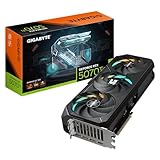
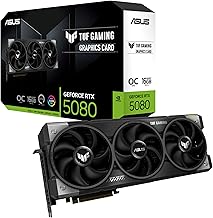
The RTX 5090 is a demanding card, and cooler design is where partners differentiate. The GIGABYTE GAMING OC with WINDFORCE and the ASUS TUF Gaming edition use massive 3.5-slot heatsinks and reinforced frames, while the MSI SUPRIM Liquid SOC trades bulk for a slim radiator. The most unusual option is the GIGABYTE AORUS RTX 5090 AI Box, an external GPU enclosure with Thunderbolt 5 and its own cooling, aimed at laptop and small-system users. Build quality across these premium cards is uniformly excellent.
Performance
All these cards use the same Blackwell GB202 silicon with 32GB of GDDR7 on a 512-bit bus, so raw performance varies only a few percent from factory overclocks. The MSI SUPRIM SOC pushes boost clocks toward 2580 MHz, and the liquid-cooled models run cooler and quieter under sustained 4K loads. The AORUS AI Box trades some performance to the Thunderbolt connection but brings 5090-class power to machines that could never house a full card. Bigger coolers mean lower noise and steadier clocks during long sessions.
Pros & Cons
- Fastest available: Every 5090 delivers class-leading gaming performance.
- Huge VRAM: 32GB handles 4K, AI, and heavy content work.
- Cooling variety: Air, liquid, and external box options.
- Strong warranties: Most partners offer three-year coverage.
- Above MSRP: Premium coolers and overclocks inflate the price.
- Large or specialized: Big air coolers need full towers; the AI Box needs Thunderbolt 5.
Alternatives to Consider
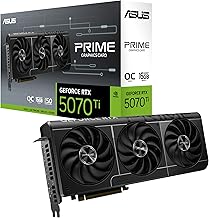
If the 5090’s premium is too steep, the RTX 5080 offers a large fraction of the performance for far less, and the 5070 Ti is excellent for 1440p. For those set on the flagship but wanting the closest-to-MSRP option, the ASUS TUF and GIGABYTE WINDFORCE editions tend to sit nearer reference pricing than the SUPRIM Liquid or AORUS AI Box.
Frequently Asked Questions
Why do RTX 5090 cards cost more than NVIDIA’s MSRP?
Partners add premium coolers, overclocks, RGB, and extended warranties on top of NVIDIA’s reference price, and strong demand pushes street prices higher, particularly near launch.
What is the AORUS AI Box?
It is an external GPU enclosure housing an RTX 5090, connecting over Thunderbolt 5. It brings flagship power to laptops and small systems that cannot fit a full-size card internally.
Is a liquid-cooled 5090 worth the premium?
Liquid-cooled models like the MSI SUPRIM Liquid run cooler and quieter and hold higher clocks under load. If acoustics and sustained performance matter, the premium is justified.
What power supply does a 5090 need?
Plan for at least a 1000W ATX 3.0 unit with a native 12V-2×6 connector to power the card safely and keep cabling clean.
Verdict
The RTX 5090’s MSRP is a baseline, not a guarantee, and real value lies in matching a cooler and form factor to your needs. The ASUS TUF Gaming and GIGABYTE WINDFORCE editions are the sensible near-reference picks, the MSI SUPRIM Liquid rewards those wanting the quietest flagship, and the AORUS AI Box serves laptop users. Confirm your case and power supply, and buy the card whose design suits your build rather than chasing the lowest sticker.