Key takeaways
- Performance Metrics: Focus on frame rates (FPS) at your target resolution and settings. Look at benchmarks for games you play, not just synthetic scores.
- VRAM Capacity: For 2026, 8GB is the minimum for mainstream gaming at 1080p/1440p. 16GB is ideal for higher resolutions, demanding titles, and future-proofing.
- Ray Tracing & DLSS/FSR: Consider NVIDIA’s DLSS or AMD’s FSR support for improved visual fidelity and performance, especially if ray tracing is a priority.
- Power Consumption & PSU: Ensure your power supply unit (PSU) can handle the card’s TDP. Check recommended PSU wattage for each model.
- Cooling Solution: Dual-fan or triple-fan designs generally offer better thermals and quieter operation, crucial for sustained performance.
What's inside
Navigating the graphics card market in 2026 can feel like a treasure hunt. With new architectures, evolving technologies, and a constant stream of releases, pinpointing the perfect balance between performance and cost is a challenge many gamers face. The sheer volume of options can be overwhelming, leading to analysis paralysis and the fear of making an expensive mistake.
This guide cuts through the noise. We’ve meticulously researched and compiled a list of the best graphics cards that offer exceptional value for their price point in 2026. Whether you’re aiming for high refresh rate 1440p gaming or solid 4K performance without breaking the bank, our curated selections are designed to empower your purchasing decision.
As an Amazon Associate we earn from qualifying purchases at no extra cost to you. Product prices and availability are accurate as of the date shown and are subject to change.


🎮 Get More From Your Setup — Free
Prime Gaming gives you free PC games every month, in-game loot, and a free Twitch channel sub — plus fast free shipping on all the gear above. New members get a 30-day free trial.
Watch: Best Graphics Card For The Price — Video Review
How to Choose a Graphics Card For The Price (2026)
- Performance Metrics: Focus on frame rates (FPS) at your target resolution and settings. Look at benchmarks for games you play, not just synthetic scores.
- VRAM Capacity: For 2026, 8GB is the minimum for mainstream gaming at 1080p/1440p. 16GB is ideal for higher resolutions, demanding titles, and future-proofing.
- Ray Tracing & DLSS/FSR: Consider NVIDIA’s DLSS or AMD’s FSR support for improved visual fidelity and performance, especially if ray tracing is a priority.
- Power Consumption & PSU: Ensure your power supply unit (PSU) can handle the card’s TDP. Check recommended PSU wattage for each model.
- Cooling Solution: Dual-fan or triple-fan designs generally offer better thermals and quieter operation, crucial for sustained performance.
The Best Graphics Card For The Price (2026)s Reviewed
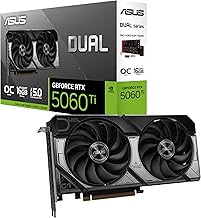
ASUS Dual NVIDIA GeForce RTX 5060 Ti 16GB GDDR7 OC Edition
This RTX 5060 Ti variant stands out with a generous 16GB of GDDR7 VRAM, making it exceptionally well-suited for high-resolution textures and future gaming demands at a competitive price point.
GIGABYTE GeForce RTX 5060 WINDFORCE OC 8G
The GIGABYTE RTX 5060 WINDFORCE OC 8G offers a robust cooling solution for its class, ensuring consistent performance for 1080p and 1440p gaming without excessive noise.
ASUS Dual Radeon RX 9060 XT 16GB GDDR6
Leveraging AMD’s latest architecture, the RX 9060 XT provides strong rasterization performance and 16GB of GDDR6 memory, making it a compelling alternative for gamers seeking excellent value.
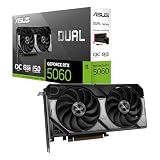
ASUS Dual NVIDIA GeForce RTX 5060 8GB GDDR7 OC Edition
The ASUS Dual RTX 5060 8GB GDDR7 is a solid performer for its price, delivering excellent 1080p gaming experiences and capable 1440p performance with DLSS 4 support.
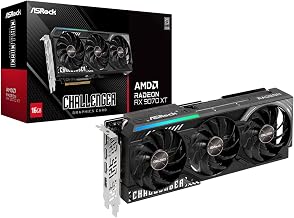
ASUS Prime AMD Radeon RX 9070 XT 16GB GDDR6 OC Edition
This RX 9070 XT boasts a premium cooling design and 16GB of GDDR6 VRAM, offering a significant step up in performance for demanding titles and higher resolutions.
Frequently Asked Questions
What is the most important factor when choosing a graphics card for price?
The most important factor is the performance per dollar. This means looking at benchmarks and frame rates in your favorite games relative to the card’s cost.
How much VRAM do I need in 2026?
For mainstream gaming at 1080p or 1440p, 8GB is generally sufficient, but 16GB is becoming increasingly important for higher settings and future-proofing.
Should I prioritize NVIDIA or AMD for value?
Both offer excellent value propositions. NVIDIA often leads in ray tracing and AI features, while AMD typically offers more raw rasterization performance for the money.
Will a higher-tier card from last year be better value than a new mid-range card?
Not necessarily. New architectures often bring significant efficiency and feature improvements. Always compare current-generation cards against previous-generation options based on current pricing and benchmarks.
Final Thoughts
For the absolute best bang for your buck in 2026, the ASUS Dual NVIDIA GeForce RTX 5060 Ti 16GB GDDR7 OC Edition and the ASUS Dual Radeon RX 9060 XT 16GB GDDR6 are standout choices, offering ample VRAM and strong performance for their price.