Key takeaways
- Resolution target: Match VRAM and GPU horsepower to your monitor — 8GB is fine for 1080p, but 1440p and 4K benefit from 12-16GB.
- VRAM capacity: More VRAM future-proofs against increasingly demanding textures and ray-traced lighting in newer titles.
- Power and case fit: Check your PSU wattage, connector type, and card length/slot width before buying, especially for triple-fan designs.
- Cooling and noise: Look for 0dB idle modes and dual/triple axial fans if you want quiet operation during everyday use.
- Upscaling support: DLSS 4 or FSR support can meaningfully extend a card’s usable lifespan at higher resolutions and settings.
What's inside
Choosing a graphics card in 2026 means navigating a crowded field of overlapping generations, confusing naming schemes, and wildly different price-to-performance ratios. Whether you’re chasing 4K/120fps gaming, building a budget 1080p rig, or upgrading an aging system, the wrong pick can leave you bottlenecked or overpaying for features you’ll never use.
This guide breaks down six of the most popular current-generation GPUs, from budget-friendly 1080p performers to high-end 1440p and 4K contenders, so you can match the right card to your resolution, budget, and gaming goals.
As an Amazon Associate we earn from qualifying purchases at no extra cost to you. Product prices and availability are accurate as of the date shown and are subject to change.


🎮 Get More From Your Setup — Free
Prime Gaming gives you free PC games every month, in-game loot, and a free Twitch channel sub — plus fast free shipping on all the gear above. New members get a 30-day free trial.
Watch: Best Gaming Graphics Cards — Video Review
How to Choose a Gaming Graphics Card (2026)
- Resolution target: Match VRAM and GPU horsepower to your monitor — 8GB is fine for 1080p, but 1440p and 4K benefit from 12-16GB.
- VRAM capacity: More VRAM future-proofs against increasingly demanding textures and ray-traced lighting in newer titles.
- Power and case fit: Check your PSU wattage, connector type, and card length/slot width before buying, especially for triple-fan designs.
- Cooling and noise: Look for 0dB idle modes and dual/triple axial fans if you want quiet operation during everyday use.
- Upscaling support: DLSS 4 or FSR support can meaningfully extend a card’s usable lifespan at higher resolutions and settings.
The Best Gaming Graphics Cards (2026)s Reviewed
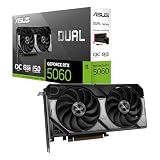
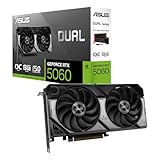
ASUS Dual RTX 5060 8GB OC Edition
A solid entry-level choice for 1080p gamers, this card pairs efficient GDDR7 memory with ASUS’s quiet Axial-tech cooling and 0dB idle mode. It’s a smart pick if you want modern features like DLSS 4 without stretching your budget.
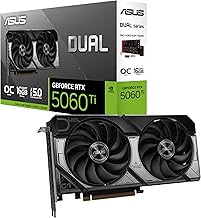
ASUS Dual RTX 5060 Ti 16GB OC Edition
The 16GB buffer sets this card apart, giving it real staying power for 1440p gaming and texture-heavy titles well beyond this generation. Combined with PCIe 5.0 and the same reliable cooling as its 5060 sibling, it’s an excellent mid-range value pick.
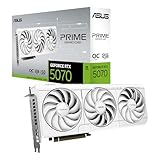
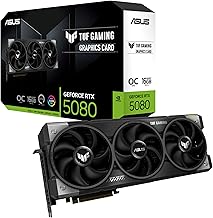
ASUS TUF Gaming RTX 5070 12GB OC Edition
Built with military-grade components and a protective PCB coating, this card is designed for gamers who want durability alongside strong 1440p-to-4K performance. Its triple-fan design keeps thermals in check even under sustained load.
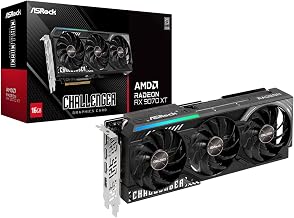
GIGABYTE Radeon RX 9070 XT Gaming OC 16G
AMD’s answer to high-end 1440p and 4K gaming, this card’s 16GB GDDR6 buffer and PCIe 5.0 interface make it a strong choice for gamers who prioritize raw performance over ray-tracing extras. GIGABYTE’s WINDFORCE-style cooling keeps it running cool under heavy workloads.
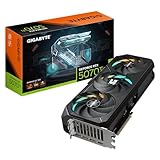
GIGABYTE GeForce RTX 5070 Gaming OC 12G
This card balances price and performance nicely, offering 12GB of GDDR7 memory and GIGABYTE’s proven WINDFORCE cooling system for reliable 1440p gaming. It’s a well-rounded alternative to the ASUS TUF 5070 for buyers who prefer GIGABYTE’s cooling design.
Frequently Asked Questions
How much VRAM do I actually need in 2026?
For 1080p gaming, 8GB is still adequate, but 1440p and 4K gaming benefit significantly from 12GB or more, especially in newer AAA titles with high-resolution textures.
Is the RTX 3060 still worth buying in 2026?
The RTX 3060 remains a capable budget option for 1080p gaming and less demanding titles, though newer RTX 5060-series cards offer better efficiency and DLSS 4 support for a similar price.
Do I need PCIe 5.0 for these cards to perform well?
No — PCIe 5.0 cards are backward-compatible with PCIe 4.0 and 3.0 motherboards, and the performance difference is negligible for gaming workloads at this time.
AMD or NVIDIA: which should I choose?
NVIDIA generally leads in ray-tracing performance and upscaling technology (DLSS), while AMD’s Radeon cards, like the RX 9070 XT, often deliver strong raw performance and value at a given price point.
Final Thoughts
For most gamers, the ASUS Dual RTX 5060 Ti 16GB offers the best balance of price, memory capacity, and future-proofing for 1440p gaming. Budget-conscious buyers should look at the ASUS Dual RTX 5060 8GB, while those chasing top-tier 1440p-to-4K performance will be well served by the GIGABYTE Radeon RX 9070 XT Gaming OC 16G.