Key takeaways
- Performance: The 5070 leads by roughly 20-30% at 1440p thanks to more cores and bandwidth, a gap that widens as settings and resolution climb.
- Memory: The 5060 Ti comes in 8GB and 16GB flavors on a 128-bit bus, while the 5070 uses 12GB on a wider 192-bit bus that feeds its cores faster.
- Price: The 5060 Ti sits a clear tier cheaper, making it the entry point, while the 5070 asks more for its extra muscle.
- Power and efficiency: The 5060 Ti draws less and is easy to run on modest PSUs, ideal for compact or budget builds.
- Features: Both fully support DLSS 4 and Multi Frame Generation, so the software experience is identical between them.
- Value at resolution: The 5060 Ti maximizes dollars at 1080p, while the 5070 justifies its premium once you move to 1440p and beyond.
What's inside
The RTX 5060 Ti and RTX 5070 are the two cards that dominate the sweet-spot of NVIDIA’s 2026 Blackwell stack, and they are exactly the pair budget-conscious 1080p and 1440p gamers agonize over. They look close on the box, but the 5070 steps up to a wider 192-bit bus and more CUDA cores, while the 5060 Ti splits into 8GB and 16GB versions that behave very differently once VRAM gets tight.
This choice matters in 2026 because texture budgets keep climbing and the price gap between these two cards is small enough that a wrong pick either wastes money or leaves performance on the table. The right answer depends heavily on your resolution, whether you enable ray tracing, and which memory configuration of the 5060 Ti you are actually comparing.
As an Amazon Associate we earn from qualifying purchases at no extra cost to you. Product prices and availability are accurate as of the date shown and are subject to change.


⚡ Save on Your Next PC — Amazon Prime
Prime members get fast free shipping on the systems above, plus early access to Prime Day & Black Friday PC deals. New members get a 30-day free trial.
Watch: RTX 5060 Ti vs 5070: Which Wins in 2026? — Video Review
Quick Verdict
The RTX 5060 Ti (especially the 16GB version) is the value champion for 1080p and lighter 1440p gaming on a tight budget, while the RTX 5070 is the better all-round pick for high-refresh 1440p and anyone who wants more ray-tracing headroom and a card that ages more gracefully.
Key Differences
- Performance: The 5070 leads by roughly 20-30% at 1440p thanks to more cores and bandwidth, a gap that widens as settings and resolution climb.
- Memory: The 5060 Ti comes in 8GB and 16GB flavors on a 128-bit bus, while the 5070 uses 12GB on a wider 192-bit bus that feeds its cores faster.
- Price: The 5060 Ti sits a clear tier cheaper, making it the entry point, while the 5070 asks more for its extra muscle.
- Power and efficiency: The 5060 Ti draws less and is easy to run on modest PSUs, ideal for compact or budget builds.
- Features: Both fully support DLSS 4 and Multi Frame Generation, so the software experience is identical between them.
- Value at resolution: The 5060 Ti maximizes dollars at 1080p, while the 5070 justifies its premium once you move to 1440p and beyond.
RTX 5060 Ti: The Budget 1080p Champion
The RTX 5060 Ti, in cards like the ASUS Dual RTX 5060 Ti 16GB OC Edition and the GIGABYTE RTX 5060 Ti Gaming OC, is aimed squarely at gamers who play at 1080p and want maximum frames for the lowest outlay. The 16GB variant is the one to seek out, because that larger buffer keeps textures comfortable in modern titles where the 8GB models like the PNY RTX 5060 Ti 8GB can run short at higher settings.
Its low power draw and compact board designs make it a natural fit for small builds and modest power supplies. The trade-off is raw horsepower: at 1440p with ray tracing enabled, the 5060 Ti has to lean harder on DLSS to hold smooth frame rates, and that is precisely where the 5070 pulls comfortably ahead.
RTX 5070: More Headroom for 1440p
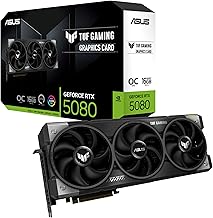
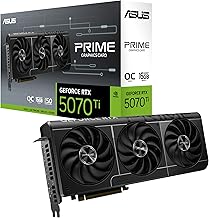
The RTX 5070, in designs like the ASUS TUF Gaming RTX 5070 12GB OC Edition, is the card to buy when 1440p is your target and you want ray tracing to stay playable at higher settings. Its extra CUDA cores and wider 192-bit bus give it a real cushion over the 5060 Ti, translating into higher and steadier frame rates in demanding games.
That performance comes at a higher price and slightly higher power draw, so it makes the most sense for gamers with a 1440p high-refresh monitor who plan to keep the card several years. If your display is a 1080p 60-144Hz panel, much of that extra capability goes unused, and the 5060 Ti becomes the smarter spend.
Which Should You Buy?
- For budget 1080p gaming: pick the RTX 5060 Ti 16GB because it delivers excellent frames per dollar with plenty of VRAM.
- For high-refresh 1440p: pick the RTX 5070 because its extra cores and bandwidth keep frame rates high where the 5060 Ti strains.
- For ray tracing: pick the RTX 5070 because it has more headroom before you must lean heavily on upscaling.
- For the smallest budget or PSU: pick the RTX 5060 Ti because it costs less and sips power.
- For a card you will keep several years: pick the RTX 5070 because its stronger base performance ages better at rising settings.
Frequently Asked Questions
Should I get the 8GB or 16GB RTX 5060 Ti?
Get the 16GB version. The extra memory keeps modern textures smooth and gives the card more staying power, and the price difference is usually modest for the benefit it provides.
Is the RTX 5070 worth the extra cost over the 5060 Ti?
If you game at 1440p or want stronger ray tracing, yes. For pure 1080p play, the 5060 Ti 16GB captures most of the fun for meaningfully less money.
Do both cards support DLSS 4?
Yes. Both are Blackwell GPUs with full DLSS 4 and Multi Frame Generation support, so the feature set is identical between them.
Can the RTX 5060 Ti handle 1440p?
It can, particularly the 16GB model with DLSS enabled, but the 5070 does it with more comfort and higher frame rates in demanding titles.
Final Verdict
Choose the RTX 5060 Ti 16GB if you play at 1080p and want the best value on a tight budget; step up to the RTX 5070 if you game at 1440p, care about ray tracing, or want a card with more headroom to stay strong for years.